Demis Hassabis:2030 年前实现 AGI、治愈所有疾病,以及 AGI 之后的生活
Demis Hassabis on AGI by 2030, Curing Every Disease, Life After AGI, and More
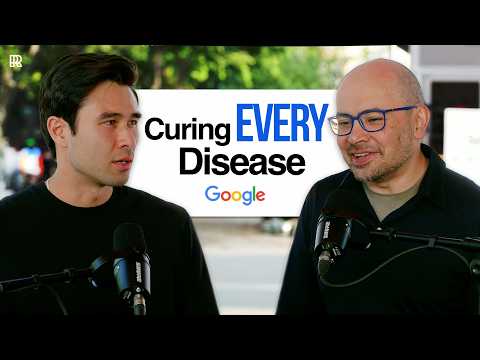
I got a lot of faith in human ingenuity. We're sort of infinitely adaptable. We're general intelligence as ourselves, don't forget. Look at what we built around us. It's incredible with our hunter-gatherer brains. Why would we stop here? Even the tools we have today, just a few years ago that would have been unthinkable, but today we've just totally adapted to it. It's like, "Oh yeah, you know, we chat with bots that are basically Turing test level."
And we make Omni models that can create any video. And we're kind of like, "Yeah, you know, that's kind of normal." What separates the great scientists from the good scientists is not their technical capability, it's their creative capability. >> After this technology is ready, how are you thinking about democratization? Is it available just to the rich? How can everyone have it? How can we make it best for the world?
Demis, thanks so much for being here again. It's always great talking to you. >> It's great to be here. >> So, Google I/O, obviously tons of announcements. What are you most excited for? >> Oh, wow. It's uh I mean, I think we announced a lot of really exciting things. Um you probably saw me pretty excited about Omni. I think this is really interesting direction for us on world models. I've always been a big proponent of that.
Um but obviously, you know, I think Flash 3.5 is the big story and integrating that into anti-gravity 2.0. I think people are going to be really pleasantly surprised. And I think it's an amazing kind of like workhorse model. And then of course, you got a lot more to come, you know, with Pro. >> Mhm. Now, thanks for mostly going uh agents here with Spark. Um I think like on the consumer side, we're really starting to see like the productivity gains and like kicking in like even with Nano Banana, for example.
Content creators are genuinely using these tools to neutral and tool kits to make make more content and that sort of stuff. I'm curious like looking at today with like Omni, for example, versus 3 years ago when when Gemini was first released. >> Yeah. >> How have your AGI timelines kind of shifted? Have Have they Have they Has it gone in according to plan or has it gone faster or slower? >> I think it's gone according to plan.
So, a a few years ago, you probably saw, maybe we even talked about in interviews, I used to say 5 to 10 years. Maybe that's 2 or 3 years ago. I think we're sort of exactly on track and and I would say my confidence interval is narrowed. So, you know, these days I'm thinking it's 2030 plus or minus a year. >> Wow. >> Okay. Um So, 2030 plus or minus a year. That's that's soon. >> Yeah, very soon. >> How are you guys preparing like internally at Google?
>> Well, we we you know, first of all, we've got to we've done a lot of engineering work under the hood in the last year, which you'll see you see the surface of when we announce things like this. But actually, you could almost think the whole stack had to be rewritten to be sort of AI first, model first, and now agent first. >> Right. >> So, that's quite a big change from like normal software. And obviously, there's all this huge infrastructure that serves billions of users every day at blinding speed, and that's all got to work.
And I think we've made massive improvements on that over the past year, and that's why you can see all the goodness of of the AI models flowing through into our product services you know, so quickly and in such compelling ways. So, I think I think that's big. And but yeah, in terms of AGI, I think we're we're sort of on track and um actually, we're sort of on track from where we thought back in 2010 when we started DeepMind, you know, people like Shane, my co-founder, was on record saying around 2028, 2030.
And you know, we thought of it as a 20-year mission, and I think we're on track for that. >> What do you think the capabilities that are missing are still before we hit AGI? >> So, I think there's still a few things missing. I feel like we still have kind of jagged intelligences in the sense that they're amazingly good at certain things. You're seeing that with things like Omni. I think it's kind of mind-blowing.
We're a little bit desensitized to all of that now, but it's you can think of it as sort of like nano banana for video, this first version. And I think content creators like yourself should have a load of fun with it. Um but you know, in terms of like it's understanding of physics and and and and the way the world works, um it's not perfect, but it's pretty mind-blowing if you stop and think about it. And uh those are hallmarks of what we imagine an AGI to be able to do.
And of course it's going to be amazingly important for things like robotics, right? And glasses. But on the other hand, there's still a lot uh the systems fail at still. And uh and you can see that in the agentic side of things. It's it's starting to become, I think in the last 6 months, actually genuinely really useful for people in their daily lives. But it's still not quite fire and forget for the average, you know, user.
I think it's uh there's still some reliability in some things uh these systems will get stuck on. So, those things need to be, you know, consistency, continual learning. There's still some uh breakthroughs that are needed in that in that direction. >> Gotcha. So, this is like sort of a research problem or >> Yes. So, we have a ton of research on things like that. Also, memory is still not quite right, I would say, in any of the systems.
It's a little bit brute force. Something smarter I think is needed there. So, there's a few, you know, long-term reasoning and planning. There's a few areas, critical areas, only a handful, that I still think um need to be cracked before, you know, we would have something like AGI that we could call AGI. >> Yeah, I mean, we're it's really cool to see the personalization across the devices now. I think last year we were talking about this and this year you guys are releasing it in the summer with the glasses and you got the watches and it connects to your phone and >> Yeah, the the Fitbits and all of these things.
Yes. >> It's slowly coming together, but the memory isn't like fully there as well. >> Yeah, exactly. So, it's coming together. I mean, I think one of the things that was most exciting showed is the progress we've made with glasses this year compared to last year and soon it's going to be in everyone's hands. I can't wait to, you know, have that myself. It's one of the dreams I've always had, a personal assistant that helps you with you everywhere you go and just helps you in your daily life, you know, get rid of mundane admin tasks, and email would be great.
Uh you know, dealing with my email. But, it's uh so you have more time to do what you know, what you want in the day. And I think we're really close now to have things really compelling things. And in some ways, I think the this idea of a universal digital assistant, in my view, is is the killer app that the form factor of glasses was always waiting for. You know, at Google of course has a huge history in long history in glasses.
But, the But, I think this is the actual uh killer app. Uh what we've been sort of building towards now, and we're on the cusp of, and it's very exciting. And then also integrating it to all the other devices and your health uh data and things like this if you want to. And then Gemini being able to help you uh with those kinds of things. >> Yeah, the Gemini subscription's quite compelling in that way, right? Cuz it really has everything in one.
>> Yeah, bundled into one, and that's one of the I think beauties and uh of of the power of the the the full stack we have at Google, you know, from the chips to the models to the to the products. >> Yeah. Well, jumping ahead here, I think a year ago uh we spoke and you said that AI could help cure all diseases in our lifetimes. Yes. But, since then, what are some of kind of like the biggest developments you've seen in AI drug discovery?
And have your timelines kind of shifted since then? >> Yeah, again, I would say they've not shifted, but they've hardened. They've They've tightened. So, I'm more sure, let's say, about those timelines now. Right? I was hoping it would be in the next decade or two we'd make these big advances in medicine. Now, I'm, you know, very sure. I wouldn't say I'm certain, but I'm I'm I'm very uh confident that that is the case.
Seeing the progress we made in the last year on on our Gemini and and for science side of things at DeepMind, but also especially Isomorphic Labs, where we're really trying to, you know, uh push forward uh the models, the specialized models that are required to understand chemistry and biochemistry, the kinds of things you need to design drugs. And it's going amazingly well. We just raised a bunch of money to accelerate even further.
And you know, we have excitingly now some test compounds in preclinical stage, which is you know, the beginning of them becoming real real cures. And I think that actually will be the biggest watershed moment in AI when that happens. >> I agree. >> Yeah. >> So when you say like cure diseases, is it sort of one disease at a time? Are there particular diseases you think come first? >> Yeah, I'm leaning more like building a platform that think of it as AlphaFold, but AlphaFold is only one small piece, but you know, maybe like half a dozen to a dozen other AlphaFold level breakthroughs.
So it's not easy. You know, we're working on all those pulled together into one continuous platform that goes from the target of interest, the way you think the disease is working, all the way to a lead compound that you want to test in clinical trials. So I'm talking about sort of compressing that average of you know, 10 years it can take to do that down to months, maybe even weeks. Of course, there's still the clinical trial stage and there's all the downstream stuff before you get an actual drug someone can take.
That can take another 10 five to 10 years. And I think AI can help with that too. But I'm really just talking about the drug discovery engine, the bit where you go from the you know, the the disease profile to a potential cure that you that needs to be tested. >> Right. And after you >> And and there's no specific disease. I hope this could work on any every type of disease type, yeah. >> Yeah. I actually noticed on the keynote today you it said cancers and immune disorders first.
>> So we're starting on those areas first, immunology, oncology. Um partly because obviously some of those things are so serious. It's it's it's more you know, the clinical side of that is quicker because they're such serious diseases. Anything you can do to help is essential there. And you know, I feel a real need to I've always felt that that's what I first and most importantly wanted to do with AI. >> Mhm.
That's really incredible work. Um I guess the follow-up question that I have is like after this technology is ready, how are you thinking about democratization? You know, is it available just to the rich? How can everyone have it? How do you make it best for the world? >> We care a lot about that at Google obviously. You know, all our products are used by you know, there's I don't know 13 products now billing user products, Gemini apps 900 million.
So we are really take very seriously this idea of democratizing the technology to everyone around the world in every country. And that's what Google's always done with search and and YouTube and all these main products. And that's why we spend so much time on these flash level and even flashlight level very efficient, very performant models. But that they're cheap and fast and can be used everywhere. Of course, we have a big need for that ourselves internally, which is why we push that for all of our products.
But we also think it's the sort of thing that developers and builders are going to really enjoy too. >> Okay, let's let's fast forward 5 years maybe let's say and let's say we hit AGI and we've cured some of the big diseases. >> Yeah. >> Where are you focusing your time as the next mission? >> Well, there's a couple of things I think I would be thinking about. One is using the AI tools myself to help us understand my my kind of overall scientific goal, which is the nature of reality.
Right, that's always what I've been sort of obsessed with since a kid. And really that means doing some physics and physics experiments, but with the help of AI. So that's one thing. Second thing I think is maybe I would pivot a little bit to more philosophical topics around you know, what it means to be human, what's special about that, how do we want society to change and adapt to this incredible transformation that is going to happen as we you know start to travel to the stars and you know what does that mean about society and the human condition.
So I'd like to maybe try and help out there if I can. >> Speaking about human meaning um Do you have any like initial thoughts there? I know you're very deep in the weeds here but >> Yeah. >> Have you thought about like what's left for human meaning after AGI at all? >> Well I think this it's all still to be written in my view. You know I think the next generation they're going to be growing up natively with these tools just like I did with computers and programming in the first place and then we created this world that I can't wait to see what the students of today are going to do growing up with these sort of tools and almost superpowers in a way and combining that with traditional skills in math and computer science.
I think that's still going to be relevant at least as far as I can see the next 10 years so that you can really understand how these systems work so you can take best advantage of them. And then um I think amazing new things are going to be created. I I've got a lot of faith in human ingenuity where we're sort of infinitely adaptable. We're general intelligences ourselves don't forget right? Look at what we built around us.
It's incredible with our hunter-gatherer brains. Why would we stop here? You know it's like we we we're amazing at adapting to tools. Look at the way we we see even the tools we have today these AI tools we're marveling at today just a few years ago that would have been unthinkable but today we've just totally adapted to it. It's like oh yeah you know we chat with bots that are basically Turing test level and we make only models that can create any video and we're kind of like yeah you know that's kind of normal.
And so I think that's the good side of human adaptability and I'm sure that will be the case going forward too. >> It's kind of the Waymo analogy of like where like you try Waymo once and you know you're taking a video in the car and it's insane you know. >> Yeah. >> Driverless car but then you do it a second time and it's like oh is know, it's kind of normal. It's kind of normal. >> It's weird that it's normal, right?
And it's the same with these AI tools now. >> But again, that's the sign that's because our brains are general and so general, even though they were evolved for particular purpose, you know, hunter-gathering, but we were tool-making species and that's what separates us from the other animals and I think that's led us to where we are today with modern civilization. I think AI is just the next step. >> What human skills do you think get more valuable as AI just increasingly gets more capable?
>> Well, I think it's very clear in the certainly in the short term. It's harder to predict out, you know, 10 years from now, but I would say in the next 5 years, it's very obvious to me that taste, design sensibility, original thinking, being able to synthesize different subjects together, I think being quite broad-minded in your knowledge and skills. I think it's going to be a amazing. People who are kind of creative and technical, people like yourself, I think are going to be in an amazing position with these technical tools, but then combining it with creativity, whether that's in in in the arts form or the science form.
You know, I've always said that what separates the great scientists good scientist is not their technical capability cuz if you're professional scientist, you're obviously very good technically, it's their creative capability, their sort of taste and judgment. And I think that's going to be at the fore. Also, connecting with your audience, whether you're building a product or making a film or game, you know, how do you really connect emotionally with the other human beings that you're making this for.
That isn't going to come from the tool, the AI tools. I think that's going to come from the from the human creator and the human expert. >> Right. So, taste and judgment and continuing to learn the skills, the AI skills needed and combining the two. >> Yes, because the deeper you understand the technology, the more you're going to be able to take advantage of it and keep it at the at the forefront. >> Right.
All right, so we're almost out of time, but the one thing I want to ask you is the new cycle is very much focused around agents and AI, but is there anything specific that you think is just been on your mind recently that is under hyped? >> Well, I think we've got a I'm very excited about this new agentic era and and you can see us leaning into that. The whole of IO is really about that, right? With Spark and anti-gravity and the the new flash.
Um, but of course we also got to think about the security side of that, too. You know, that's one of the things I think we can do really well is combine really amazing frontier capabilities, but with reliability and robustness, as well as connecting to, you know, the ecosystem of products people already know and love. So, I think that's the next phase, but I do worry about um, you know, you're seeing it a little bit with the cyber worries about uh, uh, uh, some of the models and I think that's just the beginning of some of the issues that we need to going to we need to make sure we guard against, uh, as well as getting excited about all the amazing opportunities.
So, I think that's playing a little bit on my mind. Uh, maybe this the time now to you know, to try and push some standards and maybe international cooperation. >> Got it. Well, thanks so much for your time. It's always a pleasure talking to >> Yeah, lovely talking to you as always. Thanks for doing this. >> Thank you.