Mark Zuckerberg 谈 AI 对就业的冲击、政府监管,与 Meta 眼镜如何改变他的日常
Mark Zuckerberg on AI's Job Impact, Government Regulation, & How Meta Glasses Changed His Routine
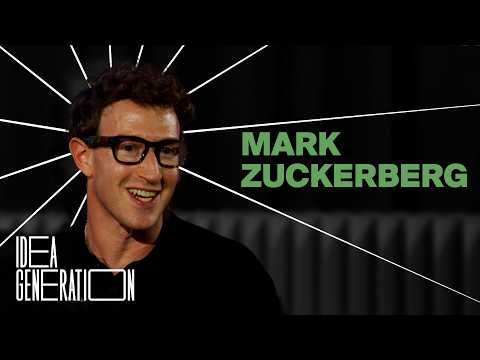
What is the best way to ensure that we have a positive future if the technology development continues on its trajectory? >> In 2004, a young man in Harvard University's Kirkland House had an idea. Obsessed with the intersection of personal computing and social networking, Mark Zuckerberg pushed his personal programming project, then known as The Facebook, live. And in that small act, revolutionized social media and changed global culture forever.
In the years that followed, Zuckerberg would scale Facebook's audience and influence beyond his or anyone's wildest imagination. He would then leverage that success into a consolidation of power, rolling up a litany of other platforms, including Instagram, WhatsApp, and Oculus, eventually renaming the parent company Meta. Throughout this meteoric rise, Zuckerberg and Meta would live up to the company's founding ethos, moving fast and breaking things.
However, the wins would always outpace the missteps, and 22 years later, the once upstart iconoclast is now a global institution. On June 23rd, 2026, in New York City, we sat down with Zuckerberg for a special live taping of Idea Generation to discuss all of this, as well as the launch of his latest market leader, Meta's AI glasses. And it all started with one idea. >> >> Hello. Welcome, everyone. Thank you for joining us for this live taping of Idea Generation.
I think it goes without saying that there is not a creative entrepreneur on the planet who has been more responsible for crafting the reality that we all share than the gentleman that sits next to me, Mark Zuckerberg. >> >> Thank you for joining us. >> Yeah, well, this is this is a big day for us, so thank you for doing this. This is great timing. You know, we're super We are we're very excited for um for the announcements today.
The um you know, the the new line of Meta glasses, it's uh it's the first line of glasses that we've designed with our partner EssilorLuxottica from the ground up. Um you know, so this builds on the work that we've been doing with Ray-Ban and Oakley and iconic brands and it basically brings all of that functionality to um a a new line that um we hope will be accessible to a lot more people, but brings all of the functionality including the most advanced AI models that we've built right into the the glasses.
So, we're we're we're very happy to to to be doing this. >> What is it about the form factor of glasses that draws you to you know, to think that that will be sort of the next I guess version of the phone maybe? >> Yeah, so I guess there's a few things overall that make us optimistic that glasses are the next computing platform. One is that you've you kind of have this trajectory over time where computing gets to be more natural and more integrated in our lives and glasses just give you the opportunity to interact with technology but remain present with the people around you, which I think is a really fundamentally important thing that obviously phones don't do.
When you interact with your phone, you're kind of interacting with this you know, small rectangle. It pulls you away from the world around you. You want to um have technology be able to um effectively fully integrate with the world around you. So, that's a big one. Another piece is that glasses are the ideal form factor for you to be able to give an AI assistant uh that that works for you the ability to see what you see, hear what you hear, talk to you throughout the day and then eventually also can display information in your field of view and and be able to overlay things on the world around you.
So, that's something that you can get parts of that with other form factors. You might be able to you know, if you have earbuds, maybe it can hear what you hear, and maybe it can it can talk to you. But, I think the visual part is going to be very important. And obviously, glasses I think are the ideal form factor for that. And then one one more thing is just is just that glasses are very It's It's a thing that people have, right?
I mean, it's there's you know, almost 2 billion people in the world wear optical glasses already. And billions more wear sunglasses. So, I kind of think we're at this moment now where it's kind of like, you know, everyone had smart had had had normal Everyone had flip phones, and then you got smartphones came out. And it just kind of became It felt pretty clear that in 5 years or whatever, all of the flip phones were going to be smartphones.
And that's basically, you know, how I feel about glasses today. It's like, what is the reason why 5 years from now any of the glasses that people wear are not going to be able to have this kind of functionality to help people out throughout their day. It just doesn't quite make sense. So, I think it's a very natural um design that people are used to. >> How long ago did you have this revelation? And sort of, you know, once you seize upon this idea, what are the dominoes that you have to start setting up?
>> Well, I mean, we've been working on this I think since 2014. Right? I think the the earliest um part of our work on, you know, we started working on virtual reality and augmented reality. And the the notion is that, okay, virtual reality, you know, allows you to do some of the augmentation of the world in a somewhat larger form factor before you get into the one that people are going to wear every day. But, some of the glasses that we've been working on it's more than 10 years at this point.
I think that the partnership with with Essilor Luxottica, you know, we've done multiple generations starting with the the original Ray-Bans that we did. And then it just each year we've added more functionality. It's gotten to uh you know, it adds more functionalities to So, now, you know, you can do phone calls, you can like listen to music. It has all this um functionality to help people who might not be able to see.
If If someone can't uh can't hear well, it can it can amplify the the hearing in their ears. Like, all the all the different functionality you just kind of add generation over generation. The AI keeps on getting better. Now, I think we're I mean, we're going to be working on this for for decades more, but I think this is like the This is I think the next 5 years are going to be a really key period for this. >> You have had access to these probably longer than almost anyone on the planet.
How have they changed your daily routine? >> The The main thing that I notice is just There are a lot of things that you could do on your phone. But if you have glasses on, it's just better. All right, so it being able to talk to like take phone calls and have your ear open and not occluded. So, it's like, all right, I'm just walking down the street and you can like hear what's going on. I think that's really nice.
Um the fact that the microphone is in the nose pad, so the clarity of the audio that it picks up is so high that you could literally be in a wind tunnel and it would sound completely clear to the person on the other side. I mean, I've taken business calls on like a jet ski. >> Not often, but um >> it has happened. And the other person could not tell that I was on it It's great, right? It's like, that's good.
You don't necessarily want to tell the other person that you're on a jet ski. So, I I think that that that kind of stuff is is nice, but the the main way that I think that this is going to work is that you know, it's not like all the other computing platforms go away, right? When we started using phones, our computers didn't go away. We still have computers, but I don't know how many of you feel this way, but I'm often I'm sitting at my desk, my computer is right there, but I still just reach for my phone to go send someone a message or something, right?
Cuz it's just the phone has kind of become the primary platform. And I think similarly, glasses are going to be that. So, I think as you can do more and more with the glasses, we'll just kind of be in a world where you're you'll have your phone with you, but it'll just kind of stay in the pocket more of the time. And then maybe eventually you'll leave it at home more of the time. But I don't I don't think that, you know, in the next 10 years we're going to stop having phones or something like that.
I just think that glasses are going to each generation become more and more the primary thing that we use and and you know, just be more integrated into our lives. >> Having started this in 2014, I know that Meta is very early or it has been very early on the AI wave and you know, responsible for a lot of like early machine learning in the 2010s, long before anyone in this crowd was interacting with an LLM. There have been revolutionary steps that have taken place in the last 6 months, 12 months.
>> Totally. >> How has that changed sort of how you think about what is inside the glasses and how people will use them? >> So, one of the neat things is that if you get the hardware package right, hardware is kind of slow, right? So, we we've been planning like this generation of glasses for whatever, 2 years whatever the the the cycle is for that and you know, we're planning the you know, 2028 line of glasses now, right?
And and all that. Then you get all these releases in between that are basically just the AI getting better and better. So, if you buy these glasses today, they're just going to keep on getting more and more useful for you as the AI becomes more powerful and able to do more things. So, the biggest advances in the last couple of years I I'd say there's the the simple one on multimodal understanding, right? So, just being able to not just ask it a question, but actually have it be able to see what's going on around you and be able to to to kind of talk to you about that is is quite helpful.
And obviously language translation at this point is almost solved, right? So, you have the real-time translation built into it. So, you travel to another place, it can it can basically speak to you and it and then and translate another language. But one of the things that I'm really excited about is the advance in the agentic AI. So, what I guess I I mean by that is moving away from this use pattern where you ask it a question and it's one question, one answer, right?
It's what what I think this is going to evolve more towards is either you give it a task and it goes away and thinks and then comes back a a bit later or you [snorts] just have these like live sessions where you know, it's like I'm cooking, I'm like baking something with my daughter and I'm terrible at this, and I'm just trying to do it to hang out with my 3-year-old who's into baking, and like it can basically just it's like no, really don't do that.
Like do this instead. And it's like, okay, that's good. I didn't even have to ask it. It just it's watching, right? It knows. Um Like do not do not put the flour there. Um so, that I think is um that is is really good. Right? And and basically as you tune the the exam as you tune the system, you can go from you know, half an hour of of like the always-on AI to an hour to 2 hours to eventually that's like just all day.
Right? And then that's a very different mode of using the AI where now if obviously you'll have control over how it's how your um when when you want it to be on and not, but you can see that like pretty quickly I think we're going to get to the zone where you you effectively have the ability for your AI to see what you see, hear what you hear, summarize that, help you out with all of these things throughout the day, and it just kind of amazing when you plug this stuff into an AI, how much of the signal that we have throughout our day that we just kind of miss or we, you know, we tune stuff out cuz we're focused on something, but there's something else happening that was important, or someone said something in a conversation, and you know, so it's kind of the ability to have that kind of memory or be able to help you in all these ways is going to be incredibly important.
>> How do you sort of normalize cuz there are this does allow you to be present, but it is somewhat intrusive in your life and particularly if it is helping you and actively engaging in everything that you >> you want to make sure I think so, our mantra for designing the glasses is that they have to be great glasses first. I guess what we mean is that the technology is secondary, the fashion and the wearing it is actually primary, which is kind of it was an interesting thing for us to get there as a technology company because I think and and I think all of most of the technology companies think about it is like, all right, we're trying to cram all this technology into it.
It's like this shape looks kind of like the glasses that they put out. Like why wouldn't why won't why won't people wear this? But it's I I think it's like like I think the reality is that you're going to wear the glasses you like whatever glasses you have you're going to wear for many hours and you're going to use the technology for some small fraction of it. And it's actually really important. So in order to unlock that, it needs to be that the glasses are something that you're proud to wear and they need to be comfortable so that way you'll wear them for for long periods of time.
So they have to be great glasses first. Part of that also means getting out of the way. Right? So I think a lot of technology companies kind of have the vision of oh well we can help you here and we can help you here and we can help you here and like okay let's just kind of like bombard you with stuff and it's like people don't want that. I don't want that. Right? It's like I I think you actually want it to be very sparing in terms of when it will ping you or interrupt you on something.
So that's kind of the way that we think about it is great glasses first, technology available when you want it with more and more capabilities, but we really don't want it to be intrusive. >> I was watching an interview that you gave I guess the last fall around the release of the latest Ray-Bans. And you were just sort of talking about your vision for AI in general and how you were trying to articulate I guess the idea that there would be sort of bespoke models then that people would sort of curate their own sort of suite of AI that they use.
And I'm I'm curious a year later cuz there has been quite a bit of innovation in the field. Is that still how you see it all playing out? >> Yeah. So our vision for what we're trying to build on the AI side we call personal super intelligence. And the the idea I I think it's very different from what the kind of consensus view of all of the other AI labs is. I think most other companies that are working on AI think that there's going to be like you know one big AI that everyone uses or that it's kind of like doing stuff for the world and I don't know.
I mean maybe this is just a legacy that we have of and we you know from the history of the company building social media. It's all about building tools, putting them in people's hands, believing that people should have agency to use the tools and express the things that they want to. Um in that there's fundamentally this view I don't know, I think that in order to have a good future with a strong AI, you want a lot of like checks and balances.
All right, so I don't I I I don't want to live in a future where there's like one big AI. I think that's a bad future. No matter how good the AI is, I think like that's not good. I think the way that this ends up being good is you actually just you you direct um the technology development towards empowering every individual. And the reality is that individuals, people have different aspirations. And the aspirations sometimes overlap with each other and sometimes they compete with each other.
And that competition is important because it's that is sort of the our society and markets' way of putting checks and balances on the way that things work. And I think in a world where kind of everyone has a personal superintelligence that has the context that you want it to have because you have whatever devices you you you have that can can give it the context that you want it to have about your life. And it can help you achieve your goals and work on your behalf 24/7.
And as many people around the world as possible have that, to me that's the best shot that we have of getting to a future that is like really good. Right? It's like that in that world I think people are empowered, but also you you kind of have a fundamental kind of check on on this and there's a balance of of power and how that works. So I think that that I think is just a very fundamental thing for our philosophy. And everything that we're developing from the kind of AI software and the models and the technology to the idea of the the hardware and that the glasses and different things that we'll make to make it so people can use this in different ways.
It's kind of all in the service of of that of that philosophy. >> You mentioned the sort of checks and balances and the importance of that. I I don't know if you're familiar with the book that came out last fall, if anyone builds it, everyone dies. I'm I'm a bit curious. Do you think that there's any credence to that kind of uh you know doomer concern around the implications of AI. >> I guess I'm not as familiar with that book, but I mean but I think the the the concept of of kind of AI safety is obviously a very important one, right?
So, I guess I'm a little more optimistic than that. I don't think if anyone builds it everyone will die, but I I do think that there are anything that is a powerful new technology gives people the ability to do good things and it can give people the ability to do bad things. And the more powerful the lever that you're giving people, the more good and the more harm that they can potentially do. So, obviously taking that very seriously and working to mitigate the harm while making it as positive as possible for people is incredibly important.
But that's where you get to this philosophy that I was talking about which is what is the best way to ensure that we have a positive future if the technology development continues on its trajectory? I think some people would say, "Okay, what you want to do is build a singular AI and make it like as aligned as possible." And I I just I I don't know that that's going to be enough, right? I think like because I I think the reality is this, if you have one thing that is super powerful, I don't know.
I mean there have been a lot of like you know, people or or you know, regimes that get absolute power over time and that usually just doesn't end well, right? No matter how enlightened the the thing is. And I think humans are limited in our ability to build enlightenment into a thing no matter how hard we try. So, I kind of think that there is a natural mechanism that humanity and civilization has which are checks and balances.
So, my version of this is in terms of creating a positive future is not that you have one central thing, but I think it's like you really need it to be widely distributed. And it's in some ways it's it's somewhat of a controversial concept because I think some people would say, "Oh, well if you like if you if you give a very like a model or an AI that has a lot of capabilities to individuals, won't they do bad things?"
But I don't know. I think that this is always been a historical tension between liberty and empowering individuals and um in how you build society. And I think at every step along the way we tend to, you know, benefit when we try to like go for, you know, giving people more freedom and more agency and not saying, "Oh, this is This is too much for a person to handle." We want people to have the the individual agency to do that.
Now, I think that that's the path to to a better future. So, I think we do that. I'm I'm I'm I'm pretty optimistic about the future. But, I don't know. >> The different people are trying to are trying to build different things. So, I hope our vision is the one that gets built. >> I'm curious cuz, you know, you were obviously instrumental in the creation of social media as we know it and obviously dealt with second and third-order consequences.
Some surprising and positive, some that had to be mitigated. With AI, what are the things on the horizon that you think people are not expecting that will sort of enliven society or, you know, present potential dangers? >> Yeah, so I guess the ones that most people are focused on right now is you're having this huge ability for the AI to be able to code, which is helpful because even for people who are not engineers, um there's just a lot of coding that you want it to be able to do.
So, it's like I don't know, I I put um I have this agent, I like put cameras up in in my MMA gym and I'm like, "All right, can you just watch me and like give me feedback in between rounds?" And it's like, "All right, that's actually a coding problem." Right? Cuz now it has to like deal with the the the kind of video pipeline of of processing all the the image frames that come in and piping that in and figuring out when like I'm in between rounds and then sending me the thing.
So, obviously the better that stuff gets at coding, the better it gets at being able to, you know, you get more cybersecurity threats. I think that that's obviously one of the big topics now. I I think one of the things on the horizon that I think we're going to start seeing more scientific advances. So, my like philanthropic work outside of Meta, Priscilla and I created this thing BioHub where our our goal is to help advance the pace of scientific research in order to help scientists cure and prevent disease like all diseases this century.
And when we started that we thought that that was like really ambitious. Okay, like cure and prevent all diseases this century. Now it's probably too conservative. Like I think it it like I don't know if it's going to be a decade or two decades or whatever, but I I would guess it'll be much sooner than the end of the century when when when you get there. And I think a lot of that is because of the progress of building these AI models that can effectively simulate biology and therefore help with drug design and help with understanding of fundamental parts of biology and how to get the right equilibrium for how all that works.
But, you know, the things that can create that, I think there's the concern that well, could someone who's bad use that to make things that hurt people, right? Or create like a bio weapon or something. And I think that that's still an open question, but I think it's clearly a thing that really needs to be thought through carefully. And and I think it's one of the things on the on the horizon that we need to be careful about.
So, I think that those are probably the two in the next year or two that I think there's a path to unlock a huge amount of value and also I think a clear roadmap to mitigate some of the concerns, but also pretty big concerns that that I think you want to be careful about. And then, you know, once you get beyond that, I think you start getting into these broader societal questions around like the balance of power and stuff that we talked about a minute ago that I think are just going to be really fundamental.
You know, people talk about stuff like you know, obviously there's a lot of anxiety about job displacement. Companies are always trying to do things more efficiently, right? It's like I'm I'm sure you you do, right? If you if you have a task, you don't want to just keep on doing the same task. You try to find a way to, you know, do it more efficiently. And at the same time, people are people kind of improve their own productivity.
Well, there's a natural balance of this stuff, right? So, if companies get very good at automating stuff faster than individuals get better at productivity, then you'd kind of assume that the number of jobs might decrease, but I think that people assume that that's an inevitability. I don't actually think it is. I think if you focus on empowering people and making people more productive, and that happens at a faster rate than companies get better at automating things, then in theory there should be more jobs in the future, not less.
So, I think that's why like you need this balance, right? If like if you just have a few companies and they're focused on automating all knowledge work, then like all right, I don't know. That's probably not a great future, right? But if you if you have like a balance where some companies are focused on making it so that companies can work more efficiently, but others are, you know, focused on more of this personal superintelligence vision where you're like empowering individuals and making people more productive at each step along the way, then like I think it's probably going to be pretty good.
So, I don't know. I think that this is just all stuff that you want to think through and be careful about, but um but I think that there is a path forward that can be very positive on this. >> Well, you mentioned the cyber cybersecurity thing, which obviously everyone's talking about with um Anthropic having to roll back Mythos. And I'm curious because you've obviously worked with the federal government as an advisor.
How do you think we should move forward with, you know, these sort of frontier models? >> You know, different concerns have different uh different answers for them. But, you know, if you take the jobs one that we were just talking about, my philosophy on this tends to be that more of the answer will come from putting the power into more people's hands rather than holding it back. There's kind of a spectrum from there're going to be a set of people who are going to argue, "This is really dangerous.
We must be the only ones who have this." And then there's a set of people who will say, "No, this is powerful and there's some issues, but like the answer is to make it so that this can be widely available and people will effectively check each other." I I think like different issues will have different balances of where you want to be on that. But um but I think our our kind of instincts and philosophy as a company are more on the side of empowering individuals and thinking that more of the answers you get to a better state if you if you basically put the power in more people's hands.
I definitely think that that's true on on jobs. I think that's probably true on cybersecurity, right? I mean, if you think about stuff like open-source software, it's it tends to be way more secure. Um it's it's somewhat counterintuitive, right? I mean, people thought early on, "Okay, open-source, like people can see the code, so that means that they can see they can find the vulnerabilities more. This has got to be less safe, right?"
But kind of counterintuitively, okay, if more people can see the code and then people find the vulnerabilities, then you fix the vulnerabilities, and then you can roll out the the the open-source like you can you can kind of roll out the patches for that widely, and then you end up with much more hardened software. So, I kind of think for all of this what you want is just like harden it very quickly. I I hope that we will get to a point with AI where you can write verifiably secure code that the AI can basically make it so that your so people can write code, whether it's you know, whatever home automation thing I was just talking about or whatever people are doing in their own lives, and they they can basically have the AI help them write code that is verifiably secure, so that way you kind of eliminate most of those issues.
>> You made a fairly large bet on AI with your I think it was a $14 billion investment in Scale AI and hiring Alexander Wang a year ago. Are you happy with where Meta is in the AI race and where where do you plan to be a year from now? >> I mean, I'm never happy with where we are. So, I think that that's uh How is it working for me? No, it's I mean, you got to look at the guys in the front row. It's like, "It's it's There's a pretty good day.
You launched something good. Back to work tomorrow." Now, um No, I mean, look, we're making a lot of progress. We've had these run of these llama models and unfortunately the llama 4 model was not on the trajectory we needed to be. So we did this pretty big thing to reboot the lab and and kind of build it up. And if you'd asked me a year ago, the the new the kind of new lab that we built is less than a year old at this point.
It's I think it was June 30th that we got it that we we started the the meta super intelligence labs. If you told me that we'd be where we are today in terms of the model progress, I would have been very happy with that. But because I have acclimated to the good news along the way, I now think that we should be doing even better. But so so that's so anyway, that's that's that's kind of more my my personality. But but the I think the the industry is doing is kind of making good progress.
I'm I'm quite happy with it. I'm I'm quite happy with the glasses. I think is is sort of you know, it's not just about you build a model in a lab. I think the question is like what are the ways that this can actually be something that is useful in people's lives. And we have a few form factors for this already. You have the like AI assistant app on your phone or on your computer and that's cool when you when you're when you're doing that.
Obviously very useful. You have like a billion people or more doing that. Um but I just think that you want to get it to a point where it's like more ambient and woven into your life. And I think one of the things that we've learned is that a lot of the AI products that are out there today are not very personalized yet. They're starting to you know, be able to understand some stuff from the context of previous conversations.
But the reality is is that like most of the stuff about you is not like it doesn't exist in conversations that you've had with your AI. I I think like if you want to get to this vision around personal super intelligence and something that can ambiently help you throughout your day, I think devices like glasses are going to end up being really critical to that. So that's one of the reasons why we've been working on this for a long time.
And I I think this is like one of the things that I'm most proud of that we're doing is is it's it's a it's a very novel intellectual contribution I think, in in that it's you know, I don't think that many other companies are really focused on fusing frontier AI with like really um good design that are something that you just want to wear. >> You presently have about 80% of the market share in the AI assisted glasses.
Um some competitors have stepped into uh the ring in the last week or so with announcements. What are your thoughts about them as a fairly competitive person? >> Yeah, I mean, look, it's early. So, I I mean, we're I mean, I think a lot of other companies are going to do this because we we've I think Meta and EssilorLuxottica have shown that this works. >> Yes. >> Right? So, I think we we've tried a lot of things that didn't work, right?
And and like and basically in this this one I think clearly works and now it is natural and normal that when you when you kind of have something like that now kind of the the industry will will kind of focus on that. And we have quite a technological lead on this. So, I I I feel really excited about the stuff that's coming up over the over the coming years, but there's a lot to invent, right? So, you know, part of this what we're talking about here, the the kind of glasses that can see and hear and talk to you.
There's obviously the the kind of visual side of it with the displays. So, we started rolling out the Meta Ray-Ban displays last year with the small display. We've shown the the the the basic like the prototype version of the kind of full wide field of view display. >> It's incredible. >> I mean, it's it's like magical. It's a little heavier than we'd like it to be for a for you know, we we try to we try to get to like >> it's pretty impressive.
>> Thank you. I I I yeah, I mean, it's um I I I also I mean, that one we worked on for like 10 years, that prototype. It's it's cool. We want to get it down to about 50 g, you know, maybe 60 g um or maybe even 70 g to start, but like but you know, but the real target for what we think is like all day comfort is probably closer to 50 grams. And you also mean people want a variety of different styles. Like people like different things.
So some people like very thin glasses, some people like chunkier glasses. Chunky glasses are helpful for putting a lot of technology into, right? But but if there's limits on that too, right? And and there's going to be this spectrum of things that people are going to want from some people I think will want kind of very minimal technology, very light. And then some people I think here are going to want the kind of the full immersive like wide field of view holograms.
You can like, you know, sit down at a coffee shop and have like three huge monitors up in front of you or you're like you're on a plane and you just have like a huge wide field of view TV display that doesn't physically exist, but it's there and like that's going to be awesome. But yeah, I think that there are going to be different points on the spectrum that people want for what functionality they want to have. And also different price points.
So the the more technology you put into it, the it'll be a little thicker, um which we we we think we can make stylish, but that will take some time to get the miniaturization to be very good. And also the more technology you put in the more expensive it is. So people will make decisions based on fashion, the functionality, and the price point that they want. But there is a lot to do here and I think it's um we're taking a pretty maximalist approach of like trying to I I I guess we just think that like you know, glasses are not a phone.
You People do not want the same kind of brick as a phone. This is like a very fundamental part of your expression of who you are and what you wear on a day-to-day basis. So there like you need to cover a lot of space in terms of options in in order to really serve the market. >> You mentioned these working and trying things sometimes that don't work. And you know, you've made a number of large bets during the course of your career, all of which have been backseat driven by the media from, you know, acquiring Instagram and WhatsApp to the metaverse stuff.
I'm curious, what do you think is the sort of acceptable ratio of working to not work? >> I I don't know if it's a ratio. >> Nobody bats a thousand. >> What's up? Well, yeah, I know, definitely not. I think the question is how much you win when you win. Like Walter Isaacson wrote this biography of Einstein. And like one of the things that I thought was the most interesting is like all the theories he had that were wrong.
And it's like when you look back on his life, people don't tend to remember those. Right? It's like I think it's like we're all going to get a lot of stuff wrong. I think what matters are the intellectual contributions or, you know, cultural contributions that we make that help push stuff forward. So, I don't know. I think that there's like a lot of analogies. You can You can, you know, pick a fighting analogy or something.
It's like, all right, you you get knocked down a bunch. Like what really matters is how many times do you keep trying, right? Get up and and keep going. I think we have a a pretty resilient company that is not very afraid of failure. And um and that allows us to take some some big swings and also tolerate being ridiculed for long periods of time because to some degree, if you're trying to do something that's really new, people have to think it's ridiculous for some period of time because if they didn't, then someone else would have already done it.
It would already be in the Overton window. So, you're you're you're like fundamentally trying to do things that people think are like weird or or like a little crazy. And you know, you you you obviously try to do it in a way that is um that is as grounded as possible. But I I kind of think if you're not pushing it and people don't think what you're doing is a little um is a little wild, then I don't know, you're probably just not taking enough um you're probably not you know, swinging hard enough.
Mixed like 18 metaphors in that answer, but you know, it's >> If you bat 300, you're going to the All-Star game, you know, 330, you're Hall of Fame. >> Yeah, I mean, I think the thing though about creation is that in baseball, the maximum that you can do is get a home run and, you know, you have first base, second base, you can go four, right? In creation, the upside is almost infinite. It's not like like you're not you can you can do stuff, you can hit singles, or you can build something that billions of people use.
And it's just not linear. You can like if you if you end up like building something that hundreds of millions or billions of people like, then that ends up making up for a lot of ideas that didn't end up working that well. Now, but I think that that's fine. I like it's also this is all part of the process. I I don't even think that the things that don't work aren't even necessarily failures as much as they are just ways that you were learning on the way to something that will work.
You know, there's lots of ways that we all learn. Um you know, there's kind of a market-based way where um you know, there's often a lot of different startups that do things, but in hardware, one of the things that's complicated is that it's kind of expensive to to take shots, right? So, part of what we've wanted to do is, you know, before we got into building these kind of glasses, there weren't a lot of companies that were doing this.
So, a lot of the experimentation we basically did by just doing a lot of different types of things and seeing what worked and doubling down on those things and trying to incorporate the things that um that seemed promising, but were but maybe there was like, you know, some product that we were doing, but there was something promising in it, but then bunch of other things that made it not feel that good overall. You take the promising thing, you kind of incorporate into something else, and you you keep going.
So, I don't know. I think that that's just this is all like how you learn. >> Well, you talk about sort of the the scale of creation being infinite. And you know, in the position that you have been for the last 20 years, you make decisions that impact people in ways that are much bigger than most CEOs. And in fact, probably more akin to, you know, leaders of global powers. Um how much does that pressure cost you?
>> I I different people are wired differently. Making decisions that are high stakes, but are based on ideas that I believe in has never been something that has stressed me out that much. The thing that stresses me out, part of the joy of building things is doing it with people. Right? So, like no one's doing this in a vacuum. And I think a lot of how I define what is meaningful in my own life and what I want to do in my career is I want to work with people who are the best at what they do and try to work with them on in in in new areas.
It's It's one of the reasons why, you know, I think designing the glasses has been so fun because I like I'm you know, I wasn't like a fashion person, right? And but now it's like but I have so much to learn, all right? It's like you know, so we work with, you know, the It's companies that are great and like Essilor Luxottica is the best glasses company in the world and we've learned so much working with them and I think that they've learned stuff from us on on the technology side.
It's been awesome as a partnership and you know, working with more um folks in fashion and the work that we've gotten to do on Instagram. It's It's It's really fun. I do this try I try to do it in my personal life with with different hobbies, some some of which, you know, we've talked about designing you know, designing jewelry for my wife, whatever. You know, it's like um designing different things. I think all that stuff, it's It's really fun to just work with people who are the best at what they do to learn.
The most stressful thing for me is when working with the people isn't fun. So, I I think if you if you don't feel like you have like good alignment, then that is that's actually the thing that really like stresses me out. But taking big bets on things that I believe in philosophically, I don't know. Maybe that's just like how I'm wired, but like I'm fine with that. I'm fine knowing that like my idea could be wrong and it could hurt if if if it ends up being wrong, but like I'm just wired in a way where like I I almost have to do what I believe and it will hurt me more to not do that thing than it will be to like stress or perseverate on like whether I can, you know, like afford to do it.
It's like no, it's just I think that's just like the kind of my constitution on that. >> Is there anyone whose taste or instinct you trust equal to or greater than your own? >> There's a lot of people I trust more than my instinct. I think I I like trust my instinct on like kind of aesthetic or philosophy of what a good future would be, but in almost any area that we work in, you know, the people who are working on that thing are spending way more time on it than I am, right?
Just because I'm working on a lot of different projects. So, I mean I think whether it's a a partner who I'm working on a project with or you know, the the teams internally, it's I mean to some degree it's like they better have better taste on that than me or else like what are we even doing? Right? It's I mean like I'll just do it myself. Um >> >> so, yeah. >> What is your process to educate yourself when you enter into a space that you want to learn about?
>> I think it's more just immersion. So, it's not a formal process of like oh, I'm going to go I'm going to ask like these 20 questions or something. It's just like let's go find someone who I like working with or multiple people because I think that most of these projects they are like very intense and they're long-term things. So, I think doing it with a group of people who you don't just like, right? It's It was It's actually very good advice I got early on as I was building the company.
It's I was I was like a young kid at the time, right? I was like I started the company when I was 19 and I thought I should hire all these like people who had a lot of professional experience and and it's like didn't click for some reason and then one of our investors was like just like you should probably hire people who you think you'd want to be friends with, right? It's I know it's kind of like odd as as like it it as as advice, but you're going to spend so much time with these people that you kind of you you you really need to to to like each other.
So, I think that that's probably like just the kind of identification of people who you think are going to be excellent, who you want to learn from. I I I kind of have this rule for myself now where I only want to hire someone to be on my team if in an alternate universe I'd be okay working for them. And that doesn't mean that I'm trying to like I I like running the company. So I'm not like like it's not I'm not looking to flip the to flip it around, but like but I think in an alternate universe I think like any of the people on our team, I think I'd learn a lot from and I think they'd do very interesting things and I feel like that would be kind of fun, right?
And um so once you get that, you find the right people and then you spend a lot of time. And I I think that there's probably some degree of humility, but that's probably trite to say um because I think that the complexity is is obviously in knowing which things you don't know and which things you do. And a lot of times these collaborations it's not one way. It's not like you're working with someone who is the master and you're an an apprentice.
These are collaborations where you each have something to give and you're trying to understand in what ways the values around for example designing glasses vary from the values around designing an app or or or other types of things. I mean the values around designing a watch is different from the the values around designing glasses, right? And I think that that's like so I think at each step like each different area the what excellence is has some similarities in terms of of kind of craft and attention to detail and boldness in terms of the aesthetic, but there are also subtle differences.
Things certain things need to be expressed more for different for different fields than others. >> and getting that balance right is values. And negotiating that is a very interesting thing. And I think it it works a lot better when you like and trust the people. And so I think figuring that out is like a really key key part of the whole thing. >> In addition to, you know, enjoying being around the people that you work with.
I'm curious you have been in this seat for now over 20 years. You have lived to see >> a different seat. >> Well, that's fair. But most of most of your ops either retire or you know, fall by the wayside. Um and you have a lovely compound in Hawaii and I'll round up here, but infinite money. What What keeps you doing this and not just absconding to the island to hang out with the family and tinker and make jewelry?
>> Um well, that is something that Priscilla asks me a lot, especially when stuff is hard. But you know, it's it's kind of this funny thing. We have um one of our daughters is like has the I don't know whatever it is, the the gene where it's like you just have you have a lot of creative output that you need to make. And um and honestly until we had kids, I think Priscilla didn't fully understand like this element of how I was wired.
She I think she kind of thought that I was going to like just I was going to do stuff for a while and then at some point I'd I'd like mellow out, but it's um I don't know what I'd do. That would be boring. I I think it's like I just you know, it's like I I can rest for like a couple of days or I just like >> You've earned it. >> Yeah, play computer games or something. You know, but I think after that it's just like there's just stuff that you want to put into the world and or I don't know, that's that's kind of like that's how I how how I'm wired.
So, I I think it's like important to get time to recharge and relax and like make sure that you're talking to different people so you have good varied perspectives cuz if you go too deep on one thing for too long, you can kind of dry up the the creative energy, but Yeah, no, I don't know. I I don't think I'm ever going to stop. I I think it's just like I I'll just find different things to do. But they're not they don't all have to be super high stakes.
I mean, it's like like one I mean, on the ranch one of my my projects is I'm trying to like create the highest quality beef in the world. It's like this is very low stakes, right? It's like I'm not selling it. I'm not um but [snorts] but it's like I'm I'm like very into the the the genetics of the cattle where like we're okay, we're trying to figure out like how do you how do you make it so that uh you you basically can deliver the highest density diet to them.
We started uh growing macadamia trees because um like that kind of nut is like extremely dense and then you can you can they will eat a lot so they will put on weight and become fat quicker and and become delicious and but then it's a guy the macadamia nuts they have a lot of oil so you need to actually roast that. So now we need to design this whole process to like to to roast the nuts so that way you can give them to the cows and then like well okay, but you want them to eat more so then it's like um how do you how do you get them to eat more?
Well, it turns out alcohol is great right for that because well alcohol induces appetite. So okay, so that's actually why like very high-end beef they they're fed beer. But okay, what's the right balance of beer versus water? It's like I don't know. Let's let them choose. They get either as much cold beer as they want or as much room temperature water and they they can kind of balance that so now we're brewing all this beer and we're putting it out and it's like I'm never going to stop.
>> >> I like it doesn't matter how how important or like or whatever the thing is. It's like yeah, I'll I'll do some projects that that don't matter that much but like I don't know. >> How do you find time? Three kids, wife, uh like nine companies and cattle farm that you're innovating on. >> I don't know. I actually think part of the balance is you need to find some balance of different things to work on cuz I think it when you work on one thing too hard you can like you can burn it.
Right? And you can burn the people and it's so I think that that's actually part of the thing that that that that that's one of the things that I struggle with cuz I can get obsessive. But I don't know. I think it's just like finding interesting projects to do with with with interesting people is like a it's a good life. >> Well, on that note Mark, thank you so much for your time. This has been really great. >> >> Mhm.