Google DeepMind 掌门人警告 AI 投资已现泡沫迹象|FT 专访
Google DeepMind chief warns AI investment looks 'bubble-like' | FT Interview
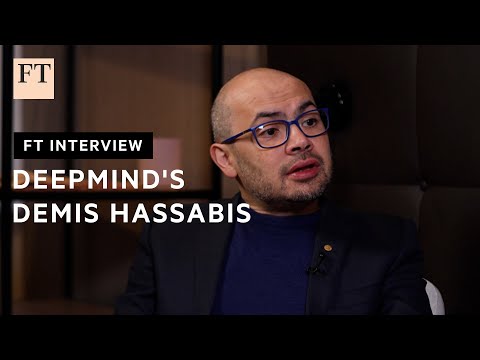
Dennis, Google launched its most powerful model, Gemini 3, just just a few months ago. It was received with a lot of excitement. Where do you think um Google is right now on the on the AI race? >> Well, we're we're we're very happy, as you say, with the last model we released, Gemini 3. Uh it's topping, you know, pretty much all the leaderboards. So, it's a great model. Uh feedback's been great from our users and and and enterprise customers.
Um but I think overall we have had a really good year last year when we look back on it. Um I think the trajectory of progress we've been making is the fastest of anyone in the industry. If you look at uh you know Gemini 2.5 the previous version that we released in April May last year that was already becoming very competitive I think at the at the top of the uh at the frontier. Uh and then I think we cemented that with Gemini 3.
But of course it's a ferocious intense competition as you know and um everyone's pushing uh as hard as they can and we've got to make sure we deliver this year too. It >> is it why um Sam Alman declared uh code red? >> Well, apparently that's what what was being reported and uh >> how do you feel about it? >> Uh you know it's it's fine. we just focus on ourselves that uh that and and I think that's uh what we got to do is kind of block out the noise and just execute uh focus on the quality of our research and then making sure we're shipping that quality fast enough into our product surfaces and I think that's what you've seen with the like our share of the chatbot space with the Gemini app has gone up um you know 650 million monthly users now and then uh you know things like AI overview 2 billion users I think it's the most used AI product in the world so we're really proud and pleased with how that's going, but I think we're just scratching the surface of what we can really do when we when we're fully in our groove >> and and we're we're going to get to to that.
But when you look at the industry, what do you think rivals are doing best? What do you think is really interesting right now? >> Well, I think um what Anthropic's doing with code is very interesting with their claw code. There's a lot of excitement around that in the developer market. We're pleased with the the performance of Gemini 3, but they've done something special there. I think other than that, I'm I'm very excited about the stuff that we're doing on multimodal.
I feel like um >> do you want to explain that? >> Yes. Multimodal being uh Gemini from the beginning has been multimodal. And by that I mean being able to deal with more than just language and text, but actually image, video, audio as a native input and output. And um and we're bringing that all together. That's always been our strength. And the reason we want to do that, and I think that's what I'm excited about this year, is that's what you would need for uh a kind of an assistant that travels around with you in the real world, maybe on your glasses or your phone.
Uh it needs to understand the world, the context around you, the physical world. And of course, for robotics, that's critical, too. And I think I've been spending quite a lot of time on that last year, and I think that's going to be uh have some big moments in the next couple of years. >> Can you talk a little bit about these big moments? Is it is it a question of uh trying to create devices that would sort of you know the the new iPhone?
>> Yeah. >> Or the glasses. There's actually so many uh uh simultaneous things one has to do which why it's it's very exciting but also quite daunting at the moment is um at least from our perspective as Google deep mind as kind of like you know we like to think of oursel we describe ourselves internally as the kind of engine room of Google and we're providing the engine which is these you know these models like Gemini and VO and Nana Banana all these kind of um state-of-the-art models and um then we got to figure out you know how do we want to incorporate them into features in products that are really useful to the end user.
So there's that whole aspect of work which is enhancing what already exists from email to your Chrome browser to search. Um but then there are also you know all these very exciting new green field areas uh of uh you know digital assistants like the Gemini app. But what does that become over time and that including uh new devices and we're working on and we've announced recently you know partnerships with WBY Parker and Gentle Monster on new types of smart glasses.
Obviously, Google has a long history with smart glasses. Um, but I think maybe we were a bit too ahead of our time when we first started this 10, you know, 10 plus years ago at Google, um, with the devices, but now I think, you know, I think what was missing was a killer app for that. And I think, uh, a kind of universal digital assistant that helps you in your everyday life could well be that killer app uh, for things like a smart glasses that's connected to your phone.
This is an area where a lot of your competitors are are also um are also working on is it >> why do you think you will be able to compete very effectively? >> Well, I think it starts with the quality of your research and models. So, I think we have by far the deepest and uh broadest research bench. I think we have the most talent in the industry. Um, and I think that then will translate to the quality of our breakthroughs and and research innovations and then that underpins what you can do with these new products.
>> Speaking of um talent, there's a real talent war uh in the industry. Some researchers are uh getting offers for $100 million. >> Uh how are you holding on to your researchers? Are are you having to pay more than that? Look, I mean, of course, there's it's it's another part of the ferociousness of the competition is the talent wars. Um, but I think that most top researchers, you know, every they're of course fabulously well paid, but it's then beyond that is like the mission.
What are you um trying to do with your skills? You know, these are phenomenally smart people. They could do anything with their skills. Are you doing good in the world? Are you building products or, you know, applying in our case as well AI for science, scientific ends that actually you'd be proud of? and your friends and family will be proud of and you're you're overall benefiting society. And I think um we're very lucky at Google that we we have that those product surfaces that that people love and use every day from maps to email that we are uh enhancing with you know our AI work.
So it's very you know motivating to when you make a research breakthrough some you can kind of ship it and then immediately a billion users can can take advantage of that. So my expectation is that this year we're going to hear a lot more about a tech lash because there are growing concerns in in society, but there are also safety misuse um issues and we've seen several several examples uh examples of that. How concerned are you and how do you how do you protect against it?
Look, I think society is right to be worried about these things and and I think of course as you know I spent my whole career working on AI because I'm I really believe in all the benefits that are going to come from science and medicine medicine advances things like Alpha Fold that we've done. Um but um you know we need to also worry about these harmful use cases. We've tried to um be, you know, kind of get ahead of that with things like synth ID, like watermarking technology for things like deep fakes.
Um getting the right guard rails around like the usage of Gemini. Um and we take that responsibility very seriously for you know uh uh all the users that we have. Um and we try to be role models beyond what we do. So there's what we can control and then beyond that we try to be role models for what responsible use of these kind of tech deployment of these technologies looks like. And then as far as society goes in the average person is we need to show as an as an industry as a scientific field what the unequivocal benefits are more clearly more quickly and I think for us that's doubling down on our AI for science and AI for medicine work um and things like that that are kind of unequivocal goods in the world.
Uh I'm going to get to uh to that with is a morphic but just staying with the misuse and and safety uh issue. Whatever happens in in this industry and if there is a a growing tech lash it will affect all the companies. So is that something I mean are you all not getting together to discuss this? Is is any is there any effort underway to to address it as an industry? Um there are some industry groups but and of course you know most of the lab uh heads know each other quite well but I think um you're seeing different frontier labs you know do different things and um I think uh we'll have to see how that works out or we can control is what we do at Google deep mine and we try to broadcast that places like this and and show the way forward that I think you know gets most of the benefits but mitigates the risks and we hope others will will follow in that path but um you know it would need something governmental I think to to create the whole of the industry to do that and then there's also the international uh uh cooperation question too.
>> Um the other big risk this year is the the bubble bursting is >> are we in an AI bubble? >> Well yeah look look I for me it's not a binary question yes or no. Um the AI industry is very big now as you know and it's it's it's sort of uh multiffactorial. So I think my guess is um I mean from our point of view we're seeing more usage than ever, incredible demand for our models and our you know the the AI features um we you know we can barely satisfy that right there aren't enough chips to go around and um so I think from that perspective and also overall there's not going to be you know it's going to be the most transformative technology probably ever invented.
So I think from that perspective there can't really be a bubble. Um but on the other hand I think there are parts of the industry that you know do look bubble-l like for example seed rounds multi-billion dollar seed rounds in in you know new startups that don't have a product or technology or anything yet does seem a little bit unsustainable. So there may be some corrections in some parts of the market. Uh and then we have to see for my I don't worry too much about that from from from from our day-to-day.
I focus on um our technology and delivering that. And my job as head of Google DeepMind is to make sure we're well positioned no matter what happens. If the bubble bursts uh we will be fine. We've got an amazing business that we can add AI features to and and get more uh productivity out of. And also if the the bull case continues um then we've also got these amazing AI first AI native products like the Gemini app. >> You've also spoken about the AI race and the competition with with China.
Um from what I can see in in China there is the there is no AI race. It's ve it's very different from what you hear there's no sort of uh race to reach uh AGI. there is a lot more focus on applications and um and finding efficiencies. >> Is that perhaps the more sort of um realistic approach? >> Um look, it's it's it's per perhaps the more um I don't know about realistic, but uh uh the the less risky approach perhaps.
Um, and I think, by the way, I think the Chinese market, from what I understand, is is just as intensely competitive as the Western companies are with each other. It's just that I think you're right. They're more focused on the near-term applications. What can you concretely do right now rather than maybe these um more research heavy frontier capabilities that would get you to AGI? Um, I think that's fine. I I I started Deep Mind and our job is now at Google Deep Mind and and Alphab, we want to build AGI.
We think that's the ultimate goal. and then that will um unlock so many opportunities and possibilities in the world that we've talked about many times. So I think that's really the north star and um and on the way we'll create lots of useful technologies but I think um you've got to have that as a north star if you want to progress the research uh in as innovative way as possible and I think that's why in my opinion the western companies are still in the lead on that.
>> How many months are you ahead? Is it a matter of months or >> I think probably it's only a matter of months now would be my guess. Although interestingly, uh, some of the Chinese leaders, entrepreneurs I talked to, they they feel like they're more they're further behind than that. I'm not sure that's the case. You know, maybe it's only a matter of 6 months or so now, but I think it's important that because I think what um even things like Deep Seek, which was I think was a bit of an overreaction in the West to that actually is a bit overblown.
Um, there's uh they still the Chinese sort of labs haven't proven they can innovate beyond the frontier yet. They're getting faster and faster at catching up to the frontier. what the Frontier Labs are doing, but they haven't sort of innovated beyond that, like the next Transformers or something like that. They haven't proven they have that capability yet. >> Do you think they are as focused on it though? >> They're probably not, and that might be one reason why.
>> Um, there is there was in the last um uh in the last few months a debate about uh AGI. Um, and you disagreed with Yan Lun who said that uh there is no such thing as as general intelligence. You're a real expert on the brain. >> Yes. >> So, explain to me why you disagreed with him. >> Yes. Um, yeah, we have many fun debates, Yan and I, at conferences and things and and uh but uh this was an online one.
Yeah. I just think it's kind of ridiculous uh his argument on that. I think he's confusing two things which is general intelligence which I think clearly we have as humans and our brain has that um and uh and universal intelligence something that can understand anything that could be possible and um and the thing is it's obvious our brains are very general because look at modern civilization we've built and we're basically uh you know tool making uh creatures right that's what separates us from from other animals is we build tools um from all the modern uh things around us vehicles 747s, but also computers and and I'd include AI in that as well.
It's kind of like the ultimate expression of the computational tool. So, if you include all of that and the science that we do, it's unbelievably general. Um, it's not everything that could possibly happen to your retina and all these arguments he makes, but it's it's clearly general. And then the other argument I make is more from Alan Turing, who's one of my all-time scientific heroes, you know, and he proved that Turing machines um could compute anything that was computable.
So that's super general class of machine and all modern computers are based around that. But also I think most neuroscientists would agree that our brains are an approximate cheuring machine or or approximately cheuring powerful which means that we you know we can do uh in theory uh understand almost anything. So uh that's computable and so the idea is that we have our brains are a general system that can in theory learn almost anything.
Uh not that we already know that. Right? So it's it's a question of is it can do you have the learning capability versus the actual full knowledge. Obviously our brains are limited. We can't know everything a single human but in totality our brains are very very powerful >> and very flexible >> and extremely flexible. Right. >> Uh so [snorts] what is it going to take to get to AGI recursive uh self-improvement where essentially AI models can teach uh themselves?
We're not we're not there yet. How far are we from it? >> Yeah. Yeah. So, and is that the main breakthrough that you're looking at? >> Well, that's one. I mean, there are I think there are I think there are quite a few capabilities missing from today's systems that will be needed for uh something that could probably, you know, pass as AGI and um continual learning is one of those things like online learning after you've been after it's been trained, can it learn new things from the user or from experience?
Uh so, it's sometimes called continual learning or online learning. Um >> and for that, you need the personalization, right? So, that yes, that will be part of it. So if you want it to personalize then that would have that would be a form of online learning. Um but also self-arning and self-improvement can also be part of that. So that's sort of a closed loop version of like experiencing something in the world and then updating your knowledge base directly uh and automatically.
And we actually pioneered a lot of that work back 10 plus years ago now with Alph Go and Alpha Zero our games playing programs. But the of course the question is in games that's much simpler. The real world's made much messier much more complex. So the question is, can you translate some of those techniques to the messy real world? >> Um, let's get to isomorphic because originally, um, I think the company said that you'd be going to clinical trials in Q4 of 2025.
Um, but then it was preclinical. So what happened? And when will the drugs go to >> Sure. No, nothing happened. I misspoke it. I think it was one interview I gave a couple years ago. It was pre-clinical. We were um entering last year. It was was the plan. Yeah. And uh so I misspoke then. And basically our pre we're in preclinical trials with a few of our um drug programs. It's going very well. We're advancing very well.
And then as soon as that's ready, we'll move that into clinical. >> So when will we have the first AI designed drug? >> Well, I hope in the next few years, but it's it's depends on the how the preclinical trials go in the clinical trials. >> Has it been harder than you you would expect? >> Not at all. It's it's been we're we're actually doing phenomenally well and we just announced a a new deal with a new partnership with J&J yesterday.
Um so we now work with J&J, Eli, Lily, and Novartis, three of the the best farmers in the world. And we also have our own internal programs. Uh so we have like about 17 programs in total. So and the the we're going to talk a lot more about that. You'll see a lot more news from us this year uh first half of this year on on our progress which is going very well. You also announced that you were building a material science lab in the UK.
Um c can you give me >> yes >> some more detail about that? >> A little bit more. I mean we're still quite early stages with that. Um but I think material science and AI designing new materials semiconductors superconductors uh batteries these kind of things is going to be a huge part of what AI the benefits AI will bring to the world. And I think we're at uh maybe like an alpha fold one level kind of an some promising research prototypes, but we need to go further.
And for part of that is we need to be able to test our materials that our AIS are designing quickly. And so we're we're thinking about creating kind of automated lab um uh in in the UK to basically test these uh theoretical compounds that um the AI systems are coming up with. Every time I see you, I ask you what is your expectation of the what's the timeline for AGI? And I've noticed that lately all of you are not talking so much about timelines.
In fact, Sam Sam Oldman even says there is no we are in almost in uh at that at that stage. So I am going to ask you what is what is your timeline? >> Well, mine's been very consistent. I think we're about you know 5 to 10 years away. Um so maybe it's now like 4 to 9 years. So now it's like 4 to 8 years. So you know I think 2030 uh is probably the earliest you know it could be u maybe 50% chance over that that kind of time zone.
So um I I'm still sticking with my timeline. I think others who've had more aggressive timelines maybe are updating to you know to be a little bit longer and a little bit more realistic. But for me things always take a little bit longer than than ones assumes even at the pace that we're all going at. I mean that's still phenomenally that's still extremely soon. Um, I just think it's not going to be sort of like next year.
>> And your job has evolved a lot from deep mind to actually handling all of uh Google's uh AI. I'm just wondering where you see your future is uh do you want to be CEO? >> No, look, I love the I'm very happy what I'm doing. I I I love being close to the science and the research. So, I still try and carve out time to do that even though I'm running, you know, a lot of things, including some products now.
Um, but look, I can get pretty excited about I'm very general in my interests and I can get very excited about anything that's cutting edge. Um, especially if it has a especially if it has a leaderboard attached to it. Yeah, I think you know there's only so much one can do in the day and still leave enough time for uh serious thinking uh which I do at nighttime and I quite like that routine. So I hope to be able to stick with that.
>> You didn't say no. >> No. Okay, so there we go. >> Uh, thank you. Yeah. >> Thank you, Dennis. >> Thank you.