从 vibe coding 到生产环境:Logan Kilpatrick 谈 AI Studio 的演进
Vibe coding to production: Logan Kilpatrick on the evolution of AI Studio
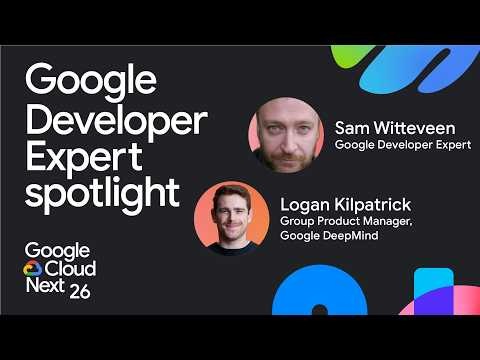
Hello and welcome to Google Cloud Next and I'm joined by Logan Kilpatrick. Logan, great to have you here. Thank you. I'm excited. This is This is a super cool setup. It's awesome to be like literally live in the venue right now. >> Exactly. We're sitting right with hundreds of people around us and stuff like that. Um what uh walking around, what have you seen today that that's been interesting? Yeah, it feels like the the era of agents is upon us.
I think this morning's keynote you heard from from TK and from many other folks about just like how much, you know, on the on the Google outside, how much progress has been made from a platform perspective to bring agents in all these new ways. And then so it feels like it's being embraced by the ecosystem. It's being embraced by by Google and our partners. Um it's interesting to like see it actually work. I think there was like So that's what I was about to say, right?
Yeah, a couple months ago we were at Next and it was like people like sort of hypothesizing about what the future might look like. >> hype but no sort of It's delivering, which I think is really really exciting. And I think we're we're at sort of still in a or chapter number one of that actually playing out of like what does the world look like when agents actually deliver on the vision that I think they they can.
It is really fascinating. Yeah, talking to people and one of the things I'm hearing and I'm sure you're the same is that there were just lots of these use cases that I never would have thought of and people are getting Gemini to do all this amazing stuff because it's multimodal, because it's can, you know, string it with a simple harness, putting these things together maybe with a sandbox and stuff like that. >> Yeah.
So you you're sort of one of the key people at AI Studio. I am we will we will I think we we agreed that we'll say it's your baby, right? Um the that's that's been a really interesting ride. Like the you know, it's been around, you know, I think originally it was called Make It Sweet. >> Yeah. All right. And uh you've been adding a lot to it. Do you want to tell us a little bit about sort of what some of the big things you've been, you know, working on recently there?
Yeah, so AI Studio has been, you know, I think we sort of I need to come up with a better way to describe this, but we have sort of the different eras of the journey. I think it was like originally it was like prompt to prototype, get your API keys, sort of get off to the races, test the models a little bit. I think we sort of crossed the chasm probably 18 months ago to like really help people go to production with what they're building.
Um and I think the takeaway from that was like people we can help so many people do more than just get an API key and sort of kick around the models and then go off and build. Like why not actually help them build the thing that they want directly in AI Studio. And I think the whole vibe coding wave that's happened. So we added this build tab in AI Studio actually last year at IO and we're coming up on a year now of sort of pushing in that direction to see what the interesting thing So why don't you describe that?
I find I'm amazed that I still find people that they don't really understand what the build tab is and you've been adding amazing stuff to it later on. So how about you tell start off telling us a little bit about it and then we can talk about what's new and stuff. For sure. So it's a full-on vibe coding experience. So you can go literally go from like prompt to a working app to adding a database to actually deploying it using Cloud Run behind the scenes in like minutes, which is really cool.
And and a lot of it is actually free as well, which is really exciting. So we have a huge like millions of people building apps in AI Studio using all these services and they're not like spending a ton of money in order to make it happen, which is something that we think a lot about is trying to make sure that the technology is accessible in the hands of this like next generation of builders, which is really exciting.
And to your point, the team is shipping lots of stuff. So we just landed a bunch of really cool things like design previews. So as you sort of ask for your app and you can kick it off right now if folks go to ai.studio/build, ask for your app and you can sort of see a bunch of different iterations of the UI and click through those while it's building. Right. And then choose which direction you want to go in. Another one, this is like the a classic reimagination of the I'm Feeling Lucky button in Google Search.
So like what we're trying to solve this inspiration problem, which is like people want to build. They're like I'm I'm so excited the tech here the technology can do all these cool things. I don't know where to get started. You can come to AI Studio, you can go to the build tab, you can click one button and we'll sort of come up with your first app idea for you, have it connected to the Google ecosystem and then you can go build that thing.
>> So what I love is that you can also sort of say I'm let you know, I'm going to put the I'm lucky but I want it to have Nena Banana, you know, one of the image model, I want a database, I want some off. Exactly. >> And it will just take all of those things and and and run with it. >> And we've gone one step further too, which is like if you start typing out your idea, we just landed this. It's called this feature called tap tap tab.
Okay. And as you start to type out your prompt, we'll use sort of like traditional auto complete except it's using flash behind the scenes to like come up with the extension of your idea. So you say like I want an app that uses AI to help me organize and then AI will sort of complete that thing. You can press tab and then it'll go the next step and then it'll go the next step. But that's where the tap tap tab comes in cuz you just keep the model will help create your prompt generatively, which is really exciting cuz I think people have a hard time actually articulating the breadth of what they can actually do as you're building apps.
And so I think this like helps meet people where they are as far as like trying to get their idea into a text box um and bring it to life. It's changing so quickly. One of the things I find is that stuff that just wouldn't work last year perhaps with the previous generation models or something like that. People will go and try it last year and they're like, oh well, that doesn't work. I'm never going to use it. It's kind of like, hey, did you use it in the last 2 weeks?
If not, go and check it out. That's what I I find myself telling people. And and also just, you know, what seemed to take like, you know, you needed a 20-page PRD before, now it the model now is much more better at intuiting what it is that you want. The fact that you can sort of add in that oh yeah, I want Firestore, I want a database or I want some off and stuff like that. Is is that what you guys are also seeing?
For sure. And yeah, and so the model in AI Studio like has all this context about how to use Gemini, how to use Firebase, how to how to use Cloud Run to deploy things. And so as you ask for your idea, it sort of it has that context in the background and it knows all the things that it's capable of and can sort of intelligently put them into place. So we've I like to say, you know, we we've we've given a more opinionated take on what it looks like to build an app and I think it's it's it's there's trade-offs, but like it's helpful because it gets people to something that actually works and uses the technology faster than they'd otherwise be able to if you had to like literally start from scratch, no context, etc.
So I think we we continue to like AI Studio is a story of like we're taking an opinionated look at what it what it means to build a vibe coding platform and we'll keep pushing in that direction. That that seems to be really smart though. Like I find, you know, one of the things that I guess when a few months ago when it didn't support Next.js, right? So now just adding Next.js where, you know, opinionated I can say look, I want you to build something but I want it in Next.
js, I want it to have a database, I want some off, right? Okay, I kind of know now that I'm getting best practices on those things and I can sort of go wild with it. Or more importantly, not so much me but like I find other people that can't even code can do this. Yeah. Right? That this is like a whole thing that we can touch on as as well is that um but I find like, you know, developers that never done front end go in there.
Yeah. Boom. They're they've now amazed that they can build a pretty nice-looking front end app. I think you're also integrating like you said the new design stuff. What what's Lots of design stuff in the works. I think we're we have like a whole slew of different things. The first one is design preview. So as you're building your app, you can actually iterate and it'll sort of show you a bunch of different options. Actually once you are and that's like while the app is doing the initial generation, we'll be rolling out soon the ability that like once you actually already have an app generated, give you multiple different like options as far as like other themes of like what could this app look like if you if you change a bunch of stuff.
Um we have a bunch of like targeted sort of like edits rolling out. We have this like edit mode where you can sort of draw on the preview of your app or you can like directly select elements and then like regenerate images or change different filters around things. Um so that will actually hopefully roll out I think this week or early next week, something like that. >> like every week you've got something new.
>> it's it's honestly I have a hard time Credit to our team for pushing so hard and making all this stuff. I mean I I genuinely have a hard time keeping up with all the things that are happening because we're just we're doing so much stuff. Which is the it's a good place to be in. So that that that's good to hear for us outside >> >> like if you if you're having a hard time keeping up, that's good.
Um another thing actually that you didn't even mention was you added voice. So the ability to actually sort of talk to it and and sort of I guess prompt it and get stuff going just purely with voice now. Yeah. So we have I mean the voice models, which we should also talk about, the text to speech models, the live models are incredible and sort of I think Gemini's really pushed the state of the art as far as audio capabilities and we have a new we have a new sort of like Lyra music playground, we have a new text to speech playground, we have all the live models sort of rolling out across the ecosystem.
But we also in the vibe coding experience, we have this feature which I've come up with all these goofy names for things. It's called it's called yap to app. Yap to app. So you can go in and you can sort of just like say whatever random, you know, garble of of words and ideas that you have. And then the thing that we've done is we put Gemini, it's not just like a pure text to speech model. We put Gemini in there to actually like formulate the idea that you were just putting together in a coherent way so the model can take action, actually bring that idea to life, fill in any blanks that you forgot to mention or sort of like shape it in a way that that's going to work.
And so we've seen a ton of people using this, which is really exciting. I think beyond the I'm Feeling Lucky button, this like yap to app experience is so popular. Uh it's like the number two most popular thing, which is awesome. So So what about mobile? Like one of the things that a lot of people are asking about is, "Okay, this is great, but I don't really need to make a website. I want to make an app. I want to put it up on the iOS App Store and the Android Google Play Store."
iOS App Store is is sort of contentious and you know, there's there's lots of conversations going on around there. We're We're definitely have a lot of exciting stuff coming in the mobile space. The team has been pushing super hard um to bring AI Studio to life on mobile. So we'll we'll have we'll have more to share there soon. Um and it'll definitely be the first cut. Like I think we're the future for mobile for us is like we want to let people build anywhere, wherever they are, for whatever platform they want.
Um and so mobile's obviously super important. Also, as you sort of think about like reaching this next 100 million user sort of like next gen developer audience, like a lot of those folks are on mobile. They don't They're not on a a web laptop, desktop, whatever it is. So we need to go there as far as reaching those users and um yeah, lots of cool stuff on the Android side as well, collaborating with those teams. Lots of interesting things on on potential uh on device models to enable, which is also really exciting.
The Gemma The Gemma 4 models are incredible. I saw a demo from our team of AI Studio mobile running uh local local models, which is really exciting. So I don't know if it'll if it'll make the cut for the initial release, but lots of cool things that we're we're poking around with, which is which is exciting. So I'm curious to sort of chunk up a bit and ask you, "Okay, so we've got sort of vibe coding, right? And we know that sort of more traditional older developers kind of were against that at the start.
Like it you know, there was a lot of And And now we're hearing the term sort of agentic engineering, which sounds like a nice rebranding of vibe coding. Um And And I can get it why people were against it last year because it you know, you would get to a certain point and then you would reach bugs and you couldn't fix it or whatever. It does seem that's changed though, especially in the last few months. Like since Gemini 3 came out, uh what what's your take on that?
Yeah, you're right. I think um folks for the right reasons and actually like we feel this inside Google as well. Sort of like there's a high bar for like landing code, especially in like production systems. And like even for AI Studio specifically, like what we've actually ended up doing is like there's a lot of folks, me, Amar, others on the team who are vibe coding things like in the actual AI Studio product like production agentic engineering, not vibe coding.
Um and we're making changes to the product. And what we've had to do is like have a deeper partnership with our engineering team. So we actually have somebody now whose job is like you know, our product our our members of the technical staff team goes and makes changes to AI Studio, gets it so that all the CI is passing, it's all green, we run the tests, things look good. And then we actually hand off to the engineering team.
They take a bunch of these changes, they get them over the line, and they become the like owner and the steward of getting that code over the line and directly into the actual AI Studio code base. And I think this partnership model between folks who are like trying to vibe code and the actual like senior engineers who who are want to make sure that this thing is reliable and scalable, etc. I think works really well.
Um and then the best part is like that person who's on the hook to like get a bunch of these agentically engineered changes into the code base is also responsible for like how do we make sure that that that cycle is better. So like what are the skills that we need to put in place? What is the infrastructure that we need to build so that like we have better test coverage, we have all those things. So we I think you know, we we should probably do a um a blog post at some point because I feel like there's lots of conversation about this and I feel like our team's found a really nice sweet spot of like letting in new contributors to a production code base, while also like it's Google, we're holding the bar for quality really high um with millions of like paying customers using this platform.
So >> It It also sounds like the the the lessons that you learn from that are going to just improve for everyone, right? Not just for you guys doing it yourself. Like as you sort of learn that all of the models maybe guide not well here or that kind of thing, it allows you to course correct and make things even better for higher level quality code. 100%. That That's really fascinating to hear. One of the things so we were both at an event private event yesterday with One of the things you said there I really struck a note with me.
You talked about And And I I realized when you said this that I felt the same thing and I thought this this is a really nice You talked about like having more ambition. Mhm. Like that that I really like the way I've forgotten exactly how you language it, maybe you can remember, but you sort of were saying that like just trying these things out, you're constantly having to push yourself to have more ambition to do stuff that you wouldn't have thought was possible.
And then time and time again, at least for me, time and time again I'm I'm like blown away that wow, it works, right? You know, it can do it. Like you know, I kind of thought like, "Okay, cuz the last model or cuz at some point I tried something it didn't work." And this whole idea of ambition, you want to talk to that. Yeah, no, it's um I think about this all the time, which is like the models to your point from before, like if you haven't tried the thing in the last 6 months, like Even in the last 2 weeks.
>> Even in the last 2 weeks, yeah. It's like you you historically had to be like very precise about what you wanted AI to do for you. And I think the models have crossed the chasm where like instead of asking for one thing, you can now ask for 30 things. And the model can actually do that. Like you don't need to like we're artificially hampering what the technology is capable of because we're like trying to not let it fumble over itself, which it used to do in certain cases.
Um and so I think about this all the time. And I actually think the other thread of that story is like I now feel this weight on my shoulders because like it really it's it's not that the model like I can't be like, "Oh well, the model can't do it, so like it's fine. I'm just not going to Like now that this sort of like weight is on me, the onus is on me to be like I really could build this." Right. Um and so now there's an interesting like I'm always um at least for like actually for like internal work stuff, I'm like, "Oh there's some bug in AI Studio.
I should be the one to go fix it." Like I can't be like, "Oh sorry, I'll just you know, bank on the engineering team going and solving this problem." Like it feels like the responsibility falls on me. The same thing is true for like external projects where I'm now like the bar is high in my mind for what I what I will actually go spend as a build as a side project. And it just means like I almost need more time than before.
It's It's kind of an interesting dichotomy, which is like you'd expect because the models are so capable like you know, now I'm just doing something in like an hour over the weekend. Instead, I'm like my idea is 20 times as ambitious. I'm like, "Okay, I'm going to I need to take a week off of my ideas." Yeah, I got 20 ideas. I'm going to take a week off of work in order to pull this thing off because like I'm able to be so ambitious.
And I actually know that it's another thing that's changed is like I know in my in my you know, heart of hearts that like I can actually pull it off. I think before there was like kind of I always had this question of like am I going to go down trying to build this thing and then realize 30% of the way in that like I don't have the technical capability to pull this off. And like I don't feel that way anymore. And so it's like uh I'm kind of yeah, it's a it's an interesting experience to like go through this and like turn that chapter.
And I think we'll have more We'll all have more of these types of experiences over the next, you know, 12 to 18 months as the models become more capable. I I definitely find that myself, too. Like just things like, you know, um uh sort of multiplayer games or you know, multiplayer apps and stuff like that. You think like, "Okay, that's pretty hard thing to code. I'm going I'm going to have to read up stuff >> prompt in AI Studio.
One prompt, literally. Um the one of the other things I wanted to ask, and this is going back I guess to something you were talking about, the whole sort of next billion users, right? So I have I have some people on my team who uh are not coders, right? And I But I make sure that they, you know, build is awesome for that, right? I basically say, "Here, open this, build something, right? Try something out." I find that they're making software that I would have never thought to make.
Right? This This is one of the the things that's fundamental. And to at least to me, right? Uh and then I find myself sort of constantly going, "How did you make that?" right? And then I find that, "Okay, actually wasn't that complicated. They had a conversation, they described what they want, you know." And And but it just Have you seen things like that? 100%. I think it's uh there's there's better quotes than I'll be able to remember, but there's so many things about like, you know, intelligence is like so distributed across the globe and um like great ideas are so distributed across The thing that hasn't been distributed is opportunity.
And I think what is exciting to me is like I fundamentally believe the reason that it's important to build these types of products is because like we're putting the means of opportunity in the hands of people who wouldn't otherwise have been able to build this thing. Totally agree. And it's it's going to be like a fund like the creation of software, at least today, is like fundamentally the most economically empowering thing that you could possibly do.
And that's why people learn how to write code and historically all that stuff. And now putting that in the hands of this cohort that couldn't before is is going to be um we're we're already seeing the impact of this. Like millions of these people are using AI Studio to do this and other products. Um and I think we're like chapter one of that story, which is really exciting. Like we're like And AI Studio I think has this responsibility to now as the ability to create software actually gets solved.
Like I'm I'm fully convinced, you know, the next 12 months you'll be able to build whatever software you want. What are the next set of challenges to like actually help you build that thing that you want to build? Like it's it's actually it won't be software. It'll be 15 other things. And so we're already starting to think about like what are the next 15 other things that we need to make sure that you can do and do them in AI Studio, use the Google ecosystem, and make that all super seamless.
How How do you design like you know, for me AI Studio is ai.dev. So if people don't know that Yeah, yeah. >> that's what I always say. ai.dev studio as well. Right. ai.dev studio, too. Yes. But the funny thing is, you know, I I'm reminded by the AI.dev is that what is a dev nowadays? Right? Like That's the tension. And actually, I think we feel this tension a lot in AI Studio sort of as a product because AI Studio is the the front door to the APIs as well.
So, if you want to build with Gemini and you know, you don't actually don't have to write code in AI Studio. You can just take the API, go build off platform if you want, use whatever coding models, use use whatever tech stack you want. Um And we have this sort of like dual identity now as like a as like a builder product and as a develop like a deeply developer product. Like there's truly like millions of actual businesses built on top of the the APIs that we have.
And so, we're always walking this fine line. And I think it's like a it's definitely a transition. Um and so, we're trying to like walk the line as much as possible during this transition. But like it's tough because like we want to we want to build the powerful tool. To your point before, like developers who don't know how to do front-end stuff or don't want to do it, like you can come do that in AI Studio and we want to meet them where they are.
We also want to enable this generation of people who like don't have any code never don't even ever want to look at a single line of code. It's really tough. It's like I it's it's hard work to try to find the balance of those two things. >> definitely a challenge. Okay, so let's talk about some models, right? I you know, my background's in deep learning, big believer in LLMs. I you you it's now about 4 months since Gemini 3 came out.
For December December 2025. I um we've seen 3.1 come along. I definitely the how how those seems to be getting better and better and better. The the other thing that's fascinating, too, though, is that and and I think if this goes back even to the original Gemini, people didn't really understand what multimodal meant, right? And and they didn't understand the consequences of that. I feel now with like the new live voice mode, you know, all these other things.
You want to talk about a little bit about perhaps live voice. What what's the state of that now? Yeah, so we we rolled out I think it was last year actually at IO our first live model and it gives the ability to like stream audio and video and text directly to the model and get responses back in real time. Um I think this enables a bunch of these like real-time omnipresent use cases. It's it's actually really cool. I think it's like AI Dev Studio/live and you can sort of try out that experience.
But I think the the use case that I think we were seeing a ton of traction with initially, which is interesting to think about, is like literally screen sharing with an agent. It sees everything that you see and then you can sort of just ask it questions. And we've seen customers like, you know, I have a really complicated product experience and like I'm a non-technical user trying to use, you know, an e-commerce platform.
How do I set up a custom domain name and like I don't know how to navigate through the product and find it. And literally the live model can like walk you through and be like click and you can do cool things like add overlays and stuff like that. Be like click here and then go to this section and do that. And you can imagine I think that like omnipresent you know, tutor or helper is really exciting. I actually think we're we're going to do some interesting stuff around vibe coding, too, to like help you, you know, your one-click thought partner to like see everything that you see and help help you debug problems is something that we're thinking about, but the model is so capable.
It definitely seems amazing just the personalization of where it can meet you where you're at. So, it's not like I'm watching a YouTube video where I have to get through the first 30 minutes to go, yeah, I know all that stuff. And now, oh, okay, this is the 3 minutes like like you said, you can just power it up, say, hey, I don't know which button does this. And it will tell you. I had a really interesting experience with that last year just after IO when when it first came out.
That where I was staying in San Francisco, the refrigerator broke down, you know, cuz of filter. I'm like, I have no idea about this. So, I opened this thing up. I and it sure sure looked at the it knew exactly what refrigerator it was. That's awesome. >> what the warning button was. It told me I had to change the filter, told me where the filter was. And and and sure enough within sort of 10 minutes, I ordered a warning on from Amazon.
The next day I had a change and it was done. That's so cool. >> that would have, you know, that that was just amazing for me, right? At the time. >> share my experience. Actually, JD who's walking past right now, um who's on our team at Google, we were doing a bunch of um Astra demos, which was the sort of precursor to Gemini Live. And this was I think at IO 2024 maybe is when we first started showcasing Astra in sort of early forms.
And I don't know if folks know those like very fancy coffee machines where there's like handles and you like do all the things separately. I'm like, I I don't I'm a very simple coffee drinker. Um and every time I see those machines, I'm like, okay, I'm going to go find a bottled coffee or something because I don't know how this works. I opened up uh Astra, the precursor to this and to Gemini Live, and was asking like, what what do I actually do?
And I'm like showing the machine. It's like Okay, put your hand on this handle, twist it, pull it down, go here, and like literally like zero shot just worked. And I was like, oh, okay, I actually know how to do this thing now. >> is insane. It's very cool. I I I find so many people don't know it, too. When you pull it out and just suddenly show them, you're like, whoa. They're like it's just magic. >> It's interesting you say that.
I think we we should talk about our text-to-speech model as well, which I think is is more widely adopted because I think developers really understand that use case. This like generate audio synthetically, I think makes sense. There's a ton of use cases. I think the the challenge for live has been it's like true it's a new paradigm. And so, there isn't like an existing there wasn't something else you were using before.
What you were using before was like a a combination of like 50 different things. And so, I think from like a product market fit perspective, it's been interesting to see like who is adopting this thing. We've had to do a lot of a lot of education to sort of help people understand those use cases. Um but I think we're like finally it's starting to make its way into like everyday products and I think people will understand.
I find that people developers especially yeah don't have no clue that it can do function calling. They can use, you know, search. >> maps, everything. >> all those things that are suddenly even though it's it's voice, it's still able to then do function in the model's voice is still able to do function calling or turn things back. >> Yeah, that's the magic is cuz like you can really use it as like a like a home assistant product.
I think it's how a lot of folks do it. My favorite thing is like an omnipresent like help button. Like you're you're somebody who's just like you're stuck somewhere on the internet, you click that button, all of a sudden like there was a person over your shoulder with your consent that's like it can see what you see, you can talk to it. Um and sort of help guide you through whatever you're trying to do. I think that that's a a magical experience that I don't think is like widely diffused in the ecosystem and there's lots of alpha in in building this.
For sure. Um another magic model. Nano Banana. Yeah, yeah. Huge moment. Uh it's only gotten better since it first sort of Indeed. you know, come along. Uh where do you where do you see models like that going? And what you know Yeah, I think the the Gen Media portfolio actually >> VEO and stuff as well. >> Llyria, everything else has has just been incredible. I think it's been like a shining light of the of the Gemini story.
It's actually back to what you mentioned before. I think it's tied to the multimodal story because when you have really great multimodal understanding, it lets you actually build a really great multimodal generation model. Um I think the direction of travel is like consolidation in the offerings as far as Gen Media goes. So, I think like we've done a ton of these bespoke Gen Media models. I think hopefully we'll we'll see sort of a lot of that come into the mainline version of Gemini in the future, which is really exciting.
Um and I think you Yeah, we've just we've got a lot of different like we have the live model, we have the TTS model, we have Nano Banana, we have VEO, we have Llyria. So, there's a lot of different models. Um and I think it introduces some complexity and Even with even though there's a lot of different models, from what I understand and correct me if I'm wrong, it's still fundamentally the It is. >> and and its knowledge is what makes things like being able to reason over images in Nano Banana so cool.
Exactly. Yeah, it is I think there's like a slightly different training mixture and like a slightly different >> something when it comes out. Yeah, slightly different architecture, but like all the base, which which is actually great. It's what makes it possible for us to take any number of research bets like this is like the conceptually what we're doing for these models is actually really really similar. There are changes and then the tension becomes like what happens when you fuse these things together into a single model.
There's some gains in certain places, there's definitely some losses in others. And so, there's been a huge amount of research as far as like how do you actually bring it all together, which is exciting. That's super interesting. Any other new models that you want to announce for for us on this live stream? No, just casually drop that. Yeah, no. There's lots of great things. I think people are I see lots of I see all the tweets, lots of people looking for new models, which is exciting.
Um I think we're pushing the rock up the hill on coding. I think there's lots of huge amount huge amount of investment investment happening from us to make a great coding model. I think we've got tons of products that will benefit from us. Our customers want this. So, lots of stuff coming. Hopefully we'll have we'll have more to share on coding stuff soon. Coming soon. Yeah. Hopefully. Fingers crossed. >> So, speaking of coding, anti-gravity Yeah.
also came out with 3.0. Has really had a good, you know, a lot of good feedback around it. And they're just getting I'm amazed that team is just sort of getting started, right? When I've seen some of the things that they're doing. Um do you want to talk a little bit about that and how that's influenced maybe AI Studio and and vice versa? Yeah. You're in this interesting sort of situation where you've got these amazing teams working on very sort of unique things, but the lessons that they learn go across multiple areas.
And I think this is actually to your point, this is the beauty for Google. It's like I think the anti-gravity team is is doing an incredible job um not only in that product side, but actually like really close to research and helping push the rock up the hill from a coding model perspective, from an infrastructure perspective. And the benefits and the things that they're learning are diffusing across many Google products.
So, AI Studio is a great example of this. The the coding agent harness is actually powered by the same anti-gravity harness. So, behind the scenes we're we're using the like literally the same binary as as what's being used. So, um I think you'll see more of this sort of like cross-Google diffusion of the technology. And Google and and AI Studio and even are making a huge bet on the anti-gravity team and the work that they're doing in order to like bring this to more to more developers, which is super exciting.
So, I think to your point it's like it feels like chapter one of that story still and it's going to be it's going to be fun to see all of the all the new stuff that they end up landing. that they're totally now. Um Just speaking quickly, I don't one of the things that that that the community is, you know, frustrated I think with anti-gravity is just like the the fact of the quota lack of >> I see the tweets. >> >> I'm sure you do.
So, we saw new TPU's announced last night, right? And this is this morning. Um pretty amazing architecture. You know, about 3x more for for the inference and stuff like that. Is that going to help to be able to serve more sort of Gemini models for anti-gravity and stuff? Yeah, there's definitely I mean there's first of all like I I acknowledge the sort of like tension that folks have and and a lot of >> with being so popular, right?
>> I mean it actually is like it's a it's a death by success story, which I think there's you know we have way more demand across actually not even just anti-gravity but across like every Google product surface that's landing AI stuff. Like there's just way more demand than there is supply in order to do this. So, trying to be really intentional, trying to be transparent with people, trying to make sure that like we get the models in the hands of our paying customers.
There's a bunch of trade-offs. And so, it's not going to be it's not going to be perfect in every in every instance, but we really are trying to make sure that it lands. Like the reason we do all of this is to make sure that the models end up in the hands of people in that it benefits them. And so I get frustrated reading some of those tweets where I think you don't think if they could that they would actually >> We're we're trying.
Yeah, it's it's tough. And I think there's a lot of like there's a lot of prioritization trade-off questions and I think that's where a lot of the tension is. And I think there's actually like a a macro like stepping back like separate from our products but just like as an ecosystem, I think over the next two to three years we're going to go through this challenge which is like there's going to be so much [snorts] demand for this technology.
And there already is. There's so much pent-up demand. How is how are how is everyone going to go through this trade-off exercise of like you know, you probably will end up with a fixed amount of tokens. And like where do you deploy the tokens in your own life, in your business? All of those like that's very much the reality of what's going to happen. And so, finding those high-value use cases, finding those examples of like where you can actually move the needle and get like a huge amount of leverage, I think it's going to be the next era of this instead of just like throwing AI at everything, I think you're going to have to be more intentional about doing it in the highest value cases because there's so much demand for the for the models.
Interesting. So, even even with Google spending tons of money to build TPU's. I think they soon announced a hundred and something billion investment. All the all the money is being spent on TPU's and it's it's still there's still a huge amount of demand. Wow. I you mentioned like coding coding does seem to be where it's at at the moment, right? For like sort of like I and I I'm curious to know, okay, what what's the second thing going to be, right?
So, like a coding I get because all the labs benefit from being you know, getting better coding models means everyone can improve the models, can improve what they're building, that kind of thing. It does seem really interesting to see where what other areas of society are going to have these big impacts. I and you know, I think people would sort of propose ideas. What do you What do you see? What do you think about it?
Yeah, I think robotics is at this like at this crossroads that I think a lot of the coding models were probably at, you know 18 months ago. So, I think we're probably like 18 months from a maybe 12 months from like a bunch of these significant breakthroughs. And I think it's just because like the intelligence that we're packing in in some of these new systems is just like so high that it just covers a lot of the edge cases that existed before.
So, I'm I'm excited for that. I think there's like as a as a customer who's pre-ordered a bunch of these robotics products, I'm very excited. I hope those teams all pull it off. And there's a ton of stuff actually happening in the Gemini side from a robotics. We have a huge amount of partnerships with Boston Dynamics and others to sort of power a bunch of these next-gen experiences. So, I think that field you know, I could be off by by another six months or something like that, but I just feels like it's ripe to actually happen.
I think the other one is long-running agents. And I I sat down with Jeff Dean earlier today and sort of if you look at the the frontier of how long you can let a an agent run without a human in the loop today, it's like depending on the use case it looks different, but it's it's on the order of hours. I think as we as we look in the next 12 months it's it is truly going to be on the order of like days or weeks. And there's a huge amount of work that needs to be done in order to enable that, but I think that is the direction that we're going.
The models will go out and do the things they need to do a lot longer without human intervention, which is which is exciting. What are the big things I'm guessing research is one of the the sort of big ones. And and that's that's the first agent, right? On Gemini actually. Yeah, it's Deep Research. First you just updated this week. I still haven't had a chance to read the blog post. It's good. It's good. Read read the blog post.
So, we we back in December we released the interactions API. And as part of the interactions API we sort of brought this concept of like models and agents both being first-class citizens of the API experience. And so, we launched with Deep Research initially. Last week we just rolled out with with two new versions of Deep Research, Deep Research and Deep Research Max, which sort of pushes even farther and goes deeper and is sort of more rigorous.
And I think all of this is laying the groundwork for sort of letting developers create their own agents in the Gemini API in addition to a bunch of like new hosted agents from Google which will bring which will bring to the world, which is really exciting. So, I think we're we're seeing that. We've been laying the groundwork to make this happen. And the thing that I'm I really am excited about is like using the same underlying API for models and agents.
I think as developers sort of make this transition from interacting with raw models to actually working with agents, we're trying to make that seamless. And I think by having it like sort of side by side in the API and literally side by side in the UI now you can see models and agents. Um trying to sort of meet folks where they are. Do you think that that's this generation sort of Gmail? Like Google became really famous because of Gmail.
I'm not talking about just the communication aspect, but I'm only as a product that was sort of like a boom. Everyone had Gmail, right? Within a year or so. And it does seem to me that like as some of these agent things start to get you know, rolled out, people are going to be talking about, "Oh, my Google agent or my Gemini agent, you know, that do this this and this and whatever." Or maybe they people give them names, whatever.
Yeah, yeah. It does seem like there's something going to change there, right? Indeed. Yeah, I agree with you. I think that the the corollary is maybe like every product is going to become agentic. And so, I think that will that will be like maybe the only reason why you're saying is not true is like Is Gmail just Gmail becomes an agent? >> becomes an agent. And like just like all the other stuff becomes like Google Search or like Google is an agent and you or many agents obviously.
So, it'll be interesting to see like the foundational pieces all become agentic, which I think is the direction that we're going. All right. That's that's fascinating. So, okay, let's start to wrap it up. What I wanted to ask you also was like, okay, so you've now experienced working at a couple of different companies in this this field. You've been at the forefront though probably for at least the last six years, seven years?
Yeah. Maybe longer? Maybe longer. Um what are what are you most excited about? All right. You mentioned that the the the robotics stuff. And and I the point I wanted to make about that is in many ways that's just another modality, right? This is where you know, Gemini is being used and there were some really good fine-tunes of Gemini for robots and stuff. What are the things that that What are you And really what are the things that you three years ago you thought will never do that, right?
In my lifetime. Like I find myself constantly looking at things that were research problems you know, six, seven years ago and they're just done now, right? And and they're just solved to the point where you know, there's there's really not that much point of even doing sort of research in that particular you know, like a specific kind of NLP or something like that kind of thing. I I think I have a hypothesis and I think it's it's what our team is spending a bunch of time thinking about, which is like similar to what happened with YouTube in the internet era, the sort of like early internet area where everyone was able to become a creator.
I think that's that's happening with software. And I think so, we're thinking about this similar to like how YouTube actually thought about building a platform and an ecosystem for creators. Right. Now everyone is a sort of Now everyone's a builder. Everyone can build. And the technology is enabling that to happen and there's a huge there's there's so much breadth and such a long tail of like actually pulling that story off, but it's it's what we're spending a lot of time thinking about.
And it's also like emotionally the thing that gets me most excited because I think you look at this group of people who like have not had the means to contribute in this software economy and bringing those there's like so many I I actually work with lots of these people. So many smart people at Google even as an example who like are right next to the software who haven't historically created software. And we have someone on my team Harrison who is incredible and like does much more growth stuff.
Like he's now like the number two token consumer and is like building all of these like really cool internal had never written a single line of code in his life six months ago and is now building all of these really cool internal tools like shipping landing pages, making product experiences in AI studio, and I think we're we're just scratching the surface of like that becoming widely distributed in the economy. And I think when that happens, like we will actually will see this like phase change transition of like what the world looks like as more people build software.
And I think it's going to be for the better, which is really exciting. Um and we'll also I think I'll I'll make my last comment, which is I think it will also increase the demand for traditional developers. I think it's the other thing. I think a lot of people look at these things as mutually exclusive, right? I think it's very positive sum. Like as this total addressable market of the number of people making software increases, it increases the demand for developers because there will be a stopping point of like how far you can go if you don't understand all the detail of how this technology works.
And so there'll be a lot more cases where people want to go farther, and they need somebody they need a developer to partner with, and they need that technical co-founder or whatever it is. Um so I think that direction is really positive and it's exciting. How do we deal with like the doomers or like from what you're describing, society is going to change, right? I think that's I think it's changed pretty much all the time for the last that you know, at least hundreds years or so.
I it's going to clearly going to change. Things like education are going to have to change. The the whole sort of systems around the those things. You know, how do we sort of as as sort of professionals in this AI industry or something, I sort of convince people that it's it's not like everyone's going to die. It's not like you know, everyone's sort of so you get these really hardcore doomers which seem to get a lot of you know, a lot of publicity and stuff like that.
But they're not seeing all these opportunities. They're not seeing all these things going going on. Yeah. I mean I I I feel this uh this sense of responsibility that our team has. Like the DeepMind mission is build AI and make sure it benefits humanity. And I think the way that we do that is like deploying the technology. And I think the way that like anybody like people should rightfully be skeptical of many things that are happening in the world.
The way that you sort of meet people where they are if they're skeptical is like build technology, deploy it, show it, and let them use it. And like there's no better there's no better, you know, way to have the conversation than being able to put your hands on the technology. And I I think we have that deployment first sort of mindset as far as what our team is doing in AI studio. And doing it with urgency because I think there is like if you if you wait too long, um you know, society goes through that transition and then people sort of didn't have the chance to sort of have the conversation and understand.
So I think this is super important. It's why we have an incredible developer advocacy relations team who's like trying to and and now make build the relations, trying to like bring the technology to the world so that folks really understand what's happening. Um it's super important. On that note, I think we'll finish up. That's awesome. Thank you you know, thank you for for the conversation. Uh it's fascinating to see where things are going.
Uh fascinating to hear what you're working on. Sounds like you got a lot of cool stuff coming soon. Anything else you want to leave with people with? Um I think the only last thing I'll say is like if you have feedback, please send it to us. Like we're we're trying to push the rock up the hill. If you if you need paper cuts, any anything, anything. Paper cuts, features, whatever it is, ping us, email, Twitter, LinkedIn, whatever it is however you best mail, uh send us send us a fax, uh and we'll we'll make AI studio better for your use case.
So please keep the feedback coming. Thank you for doing this, Sam. Thanks for coming to Next and flying all the way here. Thank you for joining us today. It's been fascinating. And thank you to everyone who's been listening. I I'm sure you'll see Logan in future things going forward, and there's a lot more content coming in Next as well. I love it. Thank you all. >> Bye.