Dylan Field 谈「永远的零审美底层」
Dylan Field on the “Permanent Underclass of Zero Taste”
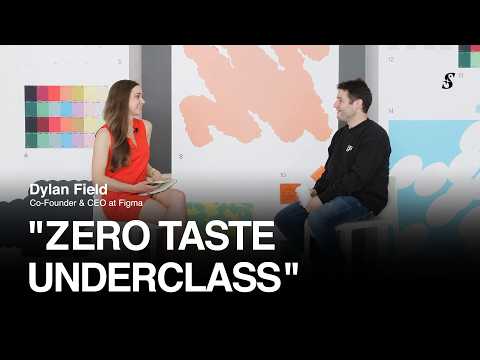
Dylan Field, co-founder and CEO >> Figma >> I heard this was the Coachella for design, but I'm literally seeing that. So, there's 10,000 people that are expected to come. What kind of companies are representing the crowd? >> Pretty much small >> It's international. People come from all over the world, not just tech or software. It's everything you can imagine. >> Any role you can imagine in terms of software and media, advertising, and content.
I mean, you know this better than anyone. >> Attention economy is real. Staying up's hard. I think that it takes not only human steering and human intent, but also it takes a point of view. >> It is not enough to wear a thinking cap. You have to actually think. >> Elon Musk once said, "If a product is special enough, it needs no logo." What do you think about that? >> >> Dylan Field >> Thank you for having me.
>> Thanks for having me. >> >> Welcome to Config. >> I mean, I've heard this was the Coachella for design, but I'm literally seeing that. It hasn't started yet, and it's already packed people. >> is day zero. >> So, what goes on today? >> Uh well, today we got Config Commons, most importantly. And it's a good time for you to get your badge, so that we don't have a long line tomorrow.
Uh one time we had like an hour keynote delay. It was very embarrassing. >> Really? >> Yeah, so we have a pre-reg thing now. Uh but also try to get people food, hang out spaces, get them to mingle. >> I think it's really cool cuz like people are always reconnecting with like old friends here, but also they have a chance to just meet so many people in the design community. And uh it's a really special community.
And that's not just for Figma, it's just for design more broadly. >> So, there's 10,000 people that are expected to come. >> Yep. >> What kind of companies are representing this crowd? >> Uh pretty much small ones. Uh but no, really. I mean, it's international. People come from all over the world. And uh, not just tech or software. It's uh, everything you can imagine. And, you know, any role you can imagine.
I see to leadership. Um, we have everybody from like the chief design officer to the uh, students that are part of our our student programs here. So, yeah. It's all over the place. >> It's pretty exciting. Okay, we're going to attempt to walk through the crowd. >> Okay. Let's go for it. >> already had some paparazzi on you. So, we'll see how this goes. Um, >> I I think they're coming for you, you know.
>> No, they're not, Dylan. This is literally the Config like Figma conference. Okay, so how many years have you been doing this and why start it in general? >> Yeah, so we started in 2020. Uh, right before the pandemic. And it was This is actually our 10th Config. Cuz we've done international Configs that are fast follows to the Config in SF. The reason we started um, we had basically user groups starting to pop up all around the world.
And then from there, as the user groups started to really gain momentum, we wanted some way to bring everyone together. And uh, at first we're like kicking around ideas like, oh yeah, maybe like a few hundred people. We decided let's go big, like 800 people. And that sold out instantly. So, then from there we were planning to right afterwards like, okay, next time's going to be really big. Well, it actually ended up being even bigger cuz of the pandemic.
And so, it was like, this is going to be a remote conference now. >> Oh my god. >> Um, We got so lucky the first time because we were able to 3 weeks, I think, before the pandemic started uh, in full in the US, the world shut down. Um, we had the chance to bring everyone together. And I can't imagine what it would be if it was 3 weeks earlier. >> Yeah, that's insane. >> Yeah. >> So, the big headline right now, which I think uh, you have pretty much disproven is that design is dead.
>> Yeah, I don't I don't >> Why is design not dead? >> Uh look around you. >> >> No, I mean I I think that the weird thing right now is everyone is kind of putting down all the other roles. So, like, you know, I'm seeing way too much of engineers saying, I don't know, that you need a PM or a designer and the PM's like, I don't need the engineer or the designer and the designer's going, maybe I don't need the PM more than the engineer.
Um and so like why is that happening? And I think that we're in a temporary phase of um people really, you know, getting excited about what they can do with AI. >> Yeah. >> Uh but not yet realizing all the limitations that they have. And hey. Uh and yeah, so I think that there's um like it's truly exciting what you can do, but also the value of a team is really important. And I think we're we're hitting a line here.
>> we're in a line. What is Is this for Is this for food? >> Yeah. >> >> I heard that you guys, not to deviate too much but I heard you guys are going to sell out of merch in like 5 seconds. >> I I hope not. Hopefully it lasts a little longer. Um but the uh But yeah, so I think it's like very lonely the idea that you're just going to work alone on everything forever. Um and I think that you know, if you want to build scalable real systems, it's for broadly build the right thing, not just like something fast.
Then I think it's really important to lean in design. Um not just from a visual and aesthetic standpoint, but also from uh user experience standpoint, from like understanding the user, understanding the culture around you. Like design is so much more than visuals and aesthetic. >> Yeah. >> Uh that's just the tip of the iceberg, but what I think is really promising is how I'm seeing so many engineers now that are uh I I hope our camera man did not trip.
Um uh we're seeing so many engineers now just get interested in Figma. And as that happens, uh they're starting to really pick it up because you go build something really fast, that's awesome, but then you're like, "Okay, can I like actually now make it great?" >> Right. I mean, what I thought was interesting is like Figma not only unlocked design for just normal people who like just didn't really know how to design anything, but your software is like really easy to use.
It's very intuitive. But now you're involving code into it, and so now engineers are literally coding design. >> Yep. Um and I think that the aspects of like what we're launching tomorrow uh will be even more in that direction. >> Really? >> So, I'm really excited about that. Go for it. Thank you. >> Thank you. >> Uh >> Okay. >> Yeah, so now we're inside, so that'll be a little calmer.
>> Let's do a little 360 here. Come around. >> This is the emptiest it'll be. >> >> So, how is it all set up? Where do people really mingle and all that kind of stuff? >> Uh the mingling will occur everywhere, but downstairs is going to be more like main stage keynote, uh and that's like where there's a lot of activations and area to explore. >> Is that your favorite part? >> Um the main stage keynote?
>> Yeah. >> It I I don't usually remember it, so uh once I get past it, then I'm like >> out? >> Yeah, it's a little bit of a blackout experience. >> that. >> Yeah. But you can watch it later online, and then you're like, "Oh, I said what?" >> Yeah, I was talking to Michael about this before, but I was like watching all of the previous Config videos, and I was like, "Shit, this is really cool."
>> that we're doing is so >> so much. >> Yeah, the content on all the tracks are amazing, and we've had such incredible speakers and like had legendary times, too. Uh I I actually, one of my favorite ones was um uh Jesper from Teenage Engineering. I don't know if you saw that one. >> No. >> I got to interview him. And uh yeah, he is a character. Definitely watch that one later. >> Okay.
>> Yeah. >> Are there any speakers this year you're excited about? >> So, so many speakers um that I'm excited about, but two that I'm like off-the-wall excited about, um one is Holly Herndon. She's total visionary artist who I think people don't appreciate like how far ahead she sees things. Um you know, she was into very specific like quirky ways of using NFTs or whatever it was called then, uh early on.
She open-sourced her voice with AI early on, you know, this is back in like 2021 or something, 2020. I mean, it's just like the the time scale that she's operating on is different than the rest of us. >> Yeah. >> Um Grant Sanderson, 3Blue1Brown on YouTube, is another person that I think will will give a great talk, uh and I can't wait to watch it. He's someone that I've been uh following for a long time.
Uh and lucky to call friend. And he does these explainer videos for math that are just incredible. And um uh really uses graphics and design to be really craft forward in his explanations, and he puts so much care into them. And just has been a teacher for so many of our lives. >> you're vibe mathing? >> That's just for fun. >> >> What does that mean? >> It's it's it's it's just a form of psychosis, you know.
>> Okay. >> Uh until it's not, but we'll see. >> >> I I I think that the models are really decent at math, uh like pure math. Um and it's a bit of an antidote to the non-verifiable domains that I'm usually in. So, for Figma, I mean, it's all vibes, uh right? Like you're trying to figure out um sometimes it's very clear, okay, like literally you didn't center the div. Like learn to center divs, AI.
Uh, but I think more often um, you know, it's more like, okay, well, actually you're giving a lot of styles that are very similar here. You're not as broad in your range as you could be if an LM's provider is asking us for feedback uh, or we're trying to steer it. And the evals we're running on uh, stuff we're doing, stuff others are doing. Like a lot of it is inherently non-verifiable. It's like got to be human judged at the end of the day.
Uh, and you can set up more automatic methods for that, but you still have that human intent. Whereas formal domains like math, math is formal as it gets. If you set up the formal systems correctly, which are pretty easy to mess up. And uh, uh, I think it's kind of just a nice anecdote in contrast to like Figma experience. >> I love that. It's very unexpected. >> >> Um, so you're talking about some of the speakers.
Were there anybody else that you're excited about? >> Uh, so many. I think that um, well, I'm in keynote brain right now. >> Yeah. >> And I think that keynote will be really awesome. So, we're going to have a bunch of Figmates that are showing just incredible stuff. >> I know, I love that. It's like we were start we started by the big sign and then all of a sudden you got swarmed. >> Oh, well, those are well, people I see all the time, yeah.
We have a great team. Um, actually uh, Ian who you met >> Mhm. >> uh, I was in a class in uh, my senior year of high school. We were in a uh, real analysis class together and it's where I first met him. And then he randomly applied to Figma at some point. Uh, and he didn't even tell me. I was like, why didn't you tell me? And I found out. She was like, I found out I'm like, this is the smartest guy like I've ever one of the smartest people I've ever met.
Like, please can we get him in? >> Oh my god. >> Uh, he still went through the full loop, of course. >> Shout out to Ian. All right, so we're going to head over and sit down for the Pantone lounge. >> It's super exclusive. There's a >> Just two of us. >> Yeah. >> >> All right, Dylan Field, we're in the Pantone Lounge. >> Lounge. We made it through. >> We made it through the crazy crowd who was screaming your name and taking pictures.
>> Maybe I exaggerated a little bit. It was a great There's a great group out there. Uh so, I'm glad you got to be there >> So, how did you convince all of them or their bosses that they should take the day off? >> Uh I think if you convince them and their bosses to come, it helps. Uh so, that's more of uh I think what's happening. >> So, they're all having a lot of fun. Because we're in the Pantone Lounge, I want to ask you a very pressing question.
>> Okay. >> What is your favorite color? I'm not going to ask about ref number. >> Purple? >> Yeah, I'm a purple guy. But, purple has a broad range. Uh and so, it's very hard to define exactly where in purple. I kind of like the range, >> >> you know? And sometimes it's like more of a reddish purple uh or some more bluish. But, yeah. I I also think it's amazing when people are great at color theory.
I am not. >> No. >> Uh I I know enough to know that I'm not amazing at color theory, but I have the utmost respect for those that are. >> You haven't gotten your color waves checked. Do you know that's like a thing, too? >> Uh like if I'm what, tetrachromatic or something like that? >> Like if you're like it's a I think it's like a Korean thing where they like color theory you and like see what your aura is and what colors you should be wearing.
>> Do you know yours? >> No, I don't think so. >> Um but, no. I mean, I think that uh composition and color is like a real skill. And um a bunch of people really try and train for this. And some people have got it It's just to the degree that others don't. And it's amazing when you find them. >> We're going to take it even more serious. Okay? You were recently on Mafia. >> Oh, yeah. >> You made it to game three.
You're now the star of the show. Dylan, how does it feel to be killed on the first try? >> Um to be specific, so there's game one where I was killed by the mafia the first night, game two where I was the mafia, and um definitely did not play my best game. I'll be real. And then game three, uh made a thought a decent argument, um but not my best work either, and got killed by the village first night. Uh it's yeah, not the best showing, but it was a lot of fun.
Uh and I was rewatching the third episode, and I think the star is actually Palmer. Yeah. Until the very end when he smirks. Sorry, spoilers for your listeners. Uh but at the very end he kind of smirks when he's like almost won. That was the first time I was going, oh, I would have figured it out. Uh the other two I would have figured out cuz they had tells. But Palmer, there was like nothing. He was just the same energy throughout, so I was pretty wowed watching it.
>> What have you learned about human psychology from that? >> Uh from mafia, I I I think there's not much to learn about human psychology from mafia. Um I played a decent amount of mafia or werewolf, you know, same game. People have religious wars around what to call it. Uh but yeah, I think that um you know, probably that people's attention spans are short, that you can diverge and kind of divert conversation, um at some point I stopped playing the game, actually.
Uh because I figured out that it was a lose-lose. Either you actually do well and you've like lost because people afterwards often times are like, how could you? I trusted you. Just like I feel terrible. Or you've like literally lost like I did those games. Um >> >> and so I I prefer to moderate and uh definitely not a practice, but it's a a one. >> It's super fun. >> was really cool that Sona uh did that.
I think he's had that vision for a long time and I just give him all the credit for like making it happen that way. >> Totally. >> more people got to do that. They just got to take a big risk and a big swing and just go for it. >> I mean, I think that that'll be kind of like a through line of most of our conversation because there's like so many attempts right now of like building a brand in the abyss of like templated AI literally everywhere.
And so whether it's like Com's marketing, media, brand, product, like we're kind of like stuck in this like bell curve of the middle. And so how should people, especially with Figma, like escape what I kind of call like the permanent underclass of zero taste? >> >> Uh as a perfect like meme fusion there. Uh the um I'll have to steal it for our marketing. Um I think basically, first of all, you know, there's a taste and there's sort of the distinction on there and they're very separate.
Um I I think that first it's important to acknowledge like if you just use an LM for everything and have it literally, you know, tell you how it wants to go build a thing, how to go design a thing, you're going to get something that it wants to give you and it's kind of diverge at point from whatever is in your head to however it processed it. I do think through workflows, and we have like something you know like called Figma weave, for example, where you can take model outputs and you can pass them through workflow and really steer it along the way.
And that can get you closer to, I think, non-deterministic generative workflows that get closer to intent and are systematic. But in general, yeah, people that are just like, "Yeah, design me the thing." You know, you're going to get the average and it's not going to stand out. And in a world where there's just more than ever in terms of software and media and advertising and content. I mean, you know this better than anyone.
The attention economy is real. Uh standing out is hard. And I think that it takes not only human steering and human intent, but also it takes a point of view. And I think that is something that people fall down on all the time because it's kind of scary to have a point of view. It's like a real point of view. And to be bold and to take a risk. Uh and so I'm hopeful and actually I'm think there's good early signs of this everywhere right now that folks are already internalizing this even if they can't speak about it like in the same words yet.
>> Mhm. >> Uh and they're already kind of from the market teaching them realizing they have to go take these bolder bets, bigger swings. And as they do that, I think they're going to uh really unlock just this explosion of creativity and we're going to see um you know, so many things tried that haven't been tried before. And so that's something that like I cannot wait for. >> This episode is brought to you by Brex, my favorite.
You become what you spend on. And I refuse to spend my time on work that shouldn't exist. Expense reports, receipt chasing, and manual closes. The companies building what's next from Vercel, OpenAI, Anthropic, Granola, and Deepgram all made the same call. They all run on Brex. Brex is the intelligent finance platform that combines cards, expenses, and banking into a single stack with agentic finance built in. AI agents that handle expenses automatically, enforce policy before spend happens, and close your books in minutes.
That's why Sourcegraph runs on Brex, so I can spend time on building and not busy work. It's time to get Brex AF. Learn more at brex.com/sorcery. That's b r e x.com/s o u r c e r y. Bye. >> Turing is training the next generation of AI with tasks that require real expertise and real-world judgment. That's why companies like Nvidia, Anthropic, Salesforce, and Gemini partner with Turing. Turing builds realistic reinforcement learning environments and data systems based on real operational traces.
The kind of infrastructure frontier labs need to train superintelligence. Visit turing.com/s o u r c e r y. >> There was a tweet that you posted retweeting a graph of like number of apps >> Mhm. >> that are being released and then the actual usage of those apps. We actually just like I talked about that with Mark Pincus. He's super product guy. He He definitely pays attention to that. But in that point, you were saying execution is cheap, but design and creativity are actually very, very important and separates the wheat from the chaff.
But in terms of that like what kind of risks should people be taking? Like what do you see is kind of like overlooked right now? >> I think so much is overlooked. I mean, everything from like what problem are you even tackling to how do you brand, what positions do you take as a company, how do you connect with people, and what emotions are you trying to bring through your brand and marketing, but also through the application software.
And then for the software side, I think you know, I'm just eager to see not only more interaction patterns tried, but really folks understanding like what is the core thing that people need and pushing all the way to get there. It's so much easier to apply patterns that you've already seen. But I think that there's just like this huge unexplored space out there of stuff that you know, it takes a long time to get right.
And that is a risk because you might not actually hit. >> Mhm. >> But if you can actually go all the way and think through the system really well and hold it in your head and hold it in your team's head, which is you know, even harder. Um to communicate it. Like you kind of have to memeify it inside your company sometimes. Uh but if you can do that and you can come up with like more novel ways for people to interact with systems, that's where I think you know, it'll really be amazing.
And the example is I'm still shocked that we're in a prompting age. Like it's been what? 5 years since GPT-3 now? I think it's 2021, June 2021, GPT-3. >> Really? >> I think so. Uh and >> That's crazy. >> Yeah, and like we're still prompting away. Um there are other ways to explore latent space. Um I just think that the interfaces for how you interact with models will evolve so much as the degree that models are part of software.
We will see a ton of exploration there. >> When we're talking about brand and and personality and forming trust, AI has really stopped a lot of trust in technology and just kind of like mainstream media. It's like I think it's like literally worse than ice. So, what builds a trusted brand? >> Well, AI, first of all, I would say is that it is really bimodal case, right? Because you've got folks that are literally in the case of, you know, a Fora or Claude, like in love with the model.
Uh and I don't just mean like they really like its outputs. Like they have affection for the model. I would say that's trust. And then you've got people that are like this taking it could take my job. I'm listening to things people are saying about how it's going to destroy the world or the economy or whatever and doom. And so that is couldn't be further apart. Like the super fans versus the super detractors. But in terms of just generally brand I think it's consistency over time.
And how do you actually show up in a way that people can expect can model in their heads and you know, keep living your values, keep showing up the right way and really doing things with the customer's interest at heart. If you're not doing that, what are you doing? So I also go back to um a line that Tim O'Reilly would always say. I would my first internship professionally was like at O'Reilly Media and I loved it there.
They were amazing to me and I'm so grateful to them. Tim O'Reilly would always talk about create more value than you capture. And I think that is extremely important and when you're perceiving you know, singletons for AI and folks that you know, you perceive might want to become monoliths and they're not saying that they're not going to want to do that. Um there's going to kind of be like a black hole and suck it all up.
Which I'm sure that that's not going to be what ends up happening. I think that they're they're all going to get a lot smarter than that. And I think most don't even want to do that in the first place. But yeah, you know, the definition of a platform is that you're creating even more value outside of the platform than you are from the platform itself. Uh this is also the Microsoft definition. Um it's like what's the GP of everything created on Windows?
Uh back when, you know, Windows was the top priority of Microsoft. Uh they wanted that sort of uh GDP of stuff built on Windows to be greater than the revenue of their Windows line. And I think that's a really special uh way to think about ecosystem. And yeah, overall, um the more that I think we lean into that kind of mindset as an industry and yeah, if companies are vocal about that and show that, then I think um people have more trust, but the doomerism um >> [clears throat] >> has to stop as well.
And it has to stop with good rationale. >> Mhm. >> Uh you know, we have to come up with the best arguments we can for not what can go wrong, but how we're going to go address it and paint an optimistic future vision for humanity. >> Right. I've been seeing a shift in sentiment towards productivity, not job loss. >> Mhm. >> And so while like I guess it's weird, but kind of the new North Star is to have more agents than employees cuz it'll help equip your employees and you'll run faster, you'll be able to do more as an organization.
You can be more on the offensive side, which I think you and Figma have been doing really well. Um and then I mean, you could also see this with like Figure AI. Like they now have more humanoid robots at their office than employees. Obviously, they're going to sell them, but still. >> Yeah, that's a little different, but yeah. >> It's a little bit different, but I'm curious um from your standpoint as the proliferation of AI agents increase, like how does that change the internal dynamics of software and how you're selling and the products you're creating and all that?
>> Um I think that there's a bunch of ways this could play out and so we'll have to see, but overall, first, I think it's not even clear how do you define the unit of an agent. >> Yeah. >> Uh so that's kind of a difficult one. But yeah, in general um it should be the case that there's great services that you offer if folks are trying to do inference um and use uh AI with your software and your platform.
That should result in like value to customer. >> Um and it should be the case that that's driven I think by humans. Um overall I think that humans being the loop will be the way that you steer towards the best outcomes. Uh and I think that uh all my experience with the AI so far have shown that on formal domains, things that are verifiable uh you can get to amazing outcomes with enough IQ points. And yet judgment is like somehow not purely correlated with just adding IQ points to the model.
Um design certainly does not seem to be correlated with adding IQ points to the model. Uh these seem to be other capabilities that you have to figure out how to train. And judgment I'm really curious about in particular. Um because yeah, just intuitively you know, the folks that are really good at strategy like I have not even found with humans the common characteristic of how to go find them. Um and design I think you know, how do you teach a model true empathy uh for a user?
How do you make it so that they can not just uh you know, read a transcript of a user interview but understand the relationships that user has uh the inflections in their voice when they're talking about the problems they have and how it matters. Um and connect that with like their world and actually have that empathy for their worldview and where they're coming from to build for them. I I think it's really hard. >> What is the biggest question right now that people should be asking?
>> Actually, I think that um you know, we're recording this on a Tuesday. Maybe I I haven't looked at the news this morning. Maybe it's already a different question, but you know, as of right now, we've got um a live situation with US government and Anthropic where they're discussing a jailbreak. I'm not even sure if jailbreak's the right word, but the use case they're concerned about seems important. >> Mhm.
>> Um but I would say that jailbreaking is something that is uh understudied and I actually think that there needs to be a kind of different posture towards um trying to get people to break jailbreak models in order to battle test them, the same way that we do with like HackerOne. There are programs that are being run by the labs, of course, but uh I think that there needs to be way more incentive out there to do that, and we need to define what it means.
Like jailbreaks are very wide in terms of the spectrum of what they do. You know, um and I I don't think we can have a conversation like this without even like defining what a jailbreak is. So, that's one question I would say, is what's a jailbreak? >> You seem to be doing some jailbreaking yourself, so >> Uh >> What is the >> Well, I I don't know what I don't know what is a jailbreak, so Um no, I mean, I I think that um there's a period of time where uh I enjoyed just like trying to figure out how models work to reason from the outside in.
Uh I'm more enjoying now just like with open-weight models looking at uh you know, interpretability research and whatnot when you can actually get access to compute. >> Mhm. >> For that, um, it's pretty fun. But, uh, overall, I think, you know, it's it I mean, just just talking with models, um, long enough leads to states that you could call a jailbreak for basically the model. >> Yeah. >> Uh, but again, what is a jailbreak?
It's not like you have to do some fancy JSON thing. Like, that's what people like to popularize it online with, but I mean, you can just talk to them and ask them questions. >> Are you token maxing? >> Uh, uh, I I think that, um, yes and no. Like, >> >> I I try to have, uh, for stuff that I'm working on, like, often times I'm trying to get the agent running longer, >> Mhm. >> um, as long as it's got a defined goal.
But, yeah, I mean, I could be running like an agent swarm or something and I'm not doing that. We have plenty of people at Figma that are and uh, are getting results though and it's amazing how much we can do there when you have folks that really understand the infrastructure that they're trying to build. And, they go and, uh, you know, they're already 10x and they can 10x themselves again, uh, by having agents really, uh, break up tasks properly.
>> So, one thing that was really interesting, I had an interview with Danielle Strachman from, previous from Thiel Fellowship, like, maybe a year ago now. And, >> She's wonderful, by the >> so cool. That was a really fun interview. Um, the one thing that she brought up and she named you, I think, a couple of times in the interview, but you were an early Thiel Fellow. Um, she said that you were hyper fluent.
I mean, even you talking about LLMs right now and like AI, like, you're definitely more in the weeds than I think common folk. So, like, why why do you think it's important to have that trait of like deep curiosity and hyper fluency? >> Well, how did that develop? >> Well, just think the world's like amazing and uh yeah, I I don't know. I I kind of just look at anything and I'm pretty much interested in it.
Um so I I don't have a great answer, but uh definitely like if you're not always learning or finding a way to learn from any conversation, uh anything that you can encounter, it's like well, why not? You know, uh there's just so much interesting stuff out there in the world. And so uh yeah, I feel like we get such a limited time on Earth, like let's make the most of it and and try to learn and connect the dots and figure out how we create some frameworks around what's happening and then break them, you know, uh it's just just like a great mystery that we're alive and what's out there.
>> Today's episode is sponsored by VCX by Fundrise, the public ticker for private tech, allowing investors of all sizes to invest in venture capital. Learn more at getvcx.com. Some of you may not have heard this yet, but our sponsor Public just launched something called generated assets and it brings AI into investing in a way I've honestly never seen before. Here's how it works. You type in an idea like AI-powered supply chain companies with positive free cash flow or defense tech companies growing revenue over 25% year-over-year.
Public's AI then dispatches a swarm of agents that scan every single US stock, evaluates them and instantly builds a custom index around your thesis. What really stands out is how clearly it explains why each stock is included. And before you invest, you can even backtest your idea against the S&P 500, so you're making decisions with real context, not just guessing. >> >> And beyond generated assets, Public lets you invest in stocks, bonds, options, crypto, all in one place.
They'll even give you an uncapped 1% match when you transfer your investments over from another platform. If you want to build a portfolio that actually reflects your thesis, visit public.com/sorcery. >> >> Paid for by Public Investing. Full disclosures in the description. Founders scale faster on Deel. Set up payroll for any country in minutes. Hire anyone anywhere. Get visas handled fast and get back to building.
Visit deel.com/sorcery. That's d e e l.com/sorcery. >> What did you learn the most while you were Thiel fellow? What was that like? >> It was um a really special experience overall. I was second year of the Thiel fellowship, so 2012. Um Or sorry, rather, I started uh yeah, started in 2012. And it's a 2-year fellowship, so the class I was with I got to know well, and they're doing amazing stuff. And still some of them are are really dear friends.
Um And there's also folks from the first class, too, who have stayed in my life as close friends and uh people who have been mentors and uh people I've looked to for advice on all sorts of things. You know, the amount of learning from that group off the charts. But also, I think it's just so lonely to start a company when you're younger. Like I was doing an internship at Flipboard before the Thiel fellowship. And at Flipboard uh it was awesome.
My co-workers were great. I hung out with them, but they're like in their 30s, and I was 20. >> Yeah. >> And just, you know, my friends hadn't graduated yet. I grew up in the Bay Area, but my friends in the North Bay, they were doing their own thing, and it kind of was further to go. The chance to just be with this group of people and socialize with them, like for me was very important. Some people probably don't need that, but I don't know, like once a week seeing a human, and uh other than my co-founder, you know, uh who I love dearly, but you know, his preference on the weekend was to write work on his compiler project.
That's how he unwound. You know, he was a special special brain, total genius. Um But yeah, for me, that was like the biggest value that I did not even expect from that program. 100K over 2 years, amazing. But the community was just even more special. >> We're going to go for a curveball right now. >> Okay. >> I know all of that is super fun, but we have this urgent question from Elad Gil. >> Yeah.
>> Or Alod. I don't know how you like to pronounce it. >> >> It's a it's a great controversy itself. >> It really is. I started my interview with it, and I'm pretty sure I mispronounced it both times. Like I guess there's like four ways to pronounce it. >> is the good news. >> So, are you ready for this? >> I don't know. >> I'm like laughing, and I haven't even said it yet.
Okay. Um Composure. Dylan. How can a man who is so skinny >> [snorts] >> live a life so fat? P H A T, the fat. >> With great mentorship from Elad Gil. >> >> I don't know. >> What sparked that question? >> the question? I don't know what that means. >> I don't I genuinely don't know, but he sent it, so I asked it. >> I I I think it's a compliment. I'm going to take it as a compliment.
>> I think you're living well. I think that's what he meant. I love that. Okay. And then we have some from Christian Garrett, too. >> Okay. >> Um Well, these aren't as No offense, Christian. These aren't as fun as that one. >> >> So, um Figma is on a tear. Last earnings really proved it. We talked about this with Mark Pincus, too. >> Cool. >> What are people missing about AI and enterprise software?
>> Mhm. Um I think that first of all, like there's, you know, market snapped narratives. Right now, the narrative seems to be like software is, you know, could put >> Good time to buy non-investment advice. >> >> But I think that a lot of software will do just fine or actually even amazing. >> Mhm. >> Um and so then it's like what are the properties of that software? Well, I think that network effects matter.
Um I think network effects can show up not just in social and human situations, but all you know, in collaboration or social networks, but also in like uh marketplace liquidity. >> Mhm. >> Um that is its own network effect. I think the sort of distribution of customer base >> Mhm. >> matters. Um and I would say that uh boring software is uh not to be undercounted. >> Mhm. >> Or things that people would call boring.
I wouldn't call boring. But um probably there are just so many things that you can find where the folks who are living the problem every day don't have that default impulse to go build software for it. And yet it's a huge problem. Uh and finally, I would say that like the data liquidity that you can establish and how that can create context how that context can create capability in a system that is its own flywheel.
And if you get that flywheel right, um I think it's very value accruing to the customer in a way that um can be extremely useful. So, that's a lot of the stuff that I'm thinking about. >> And everyone is your customer. >> >> That's what I've learned. >> I'm not sure everyone, but but we we're lucky to have a lot of great software companies and companies around the world using Figma. >> So, let's talk about the evolution a little bit.
Um this is another one of Christian's questions, but Figma evolved to platform from design to code to development and now multi-product expansion. So, where's the platform going next? >> Um I think both there's the impulse and the like quest of how do you take these surfaces and bring them more together. When you are we mean more in AI and generation? There's a huge opportunity in doing that in one place and not having to think about where do I start.
And so, that's something that I've always wanted to accomplish with Figma. It's extremely hard. >> Mhm. >> Uh and then there's also the question of like how broad can you go in terms of serving all the needs of a designer um which are growing and vast. I mean, designers give me a second. The feedback we used to get from developers now. And so, I think that if we can kind of do both of those and uh find ways to help people create their own tools >> Mhm.
>> uh on the platform, share them with their team and get value out of that, that'll be really awesome. >> Lastly. >> Yeah. >> Well, not really lastly, but from Christian why are you so bullish on SpaceX? >> Let's talk about SpaceX in the Pantone lounge, sure. >> in the room with us right now? >> Are they? Um Well, first of all, I I think there's tons to be seen on, you know, AI and their cloud business, I guess.
Uh I really don't know how to read that. So, let me just like remove all that for a moment. Mhm. The XAI part of it. Uh and instead just talk about the non-XAI part of it. I I mean, SpaceX is a great example of a company where you've got uh amazing talent who are I think really missionary um and that talent, you know, goes and quests and conquers after challenge after challenge after challenge. And I think that people lack imagination when it comes to what they can do on Earth and also what they can do in the stars and how important space can be in the long term.
Uh and I think that there's many categories that folks don't think of them going into uh which they will go into probably. Uh and I I believe it could be a very very important company uh you know, for this century and the next. So, I hope Figma can follow, too. >> Elon Musk once said, "If a product is special enough, it needs no logo." >> Mhm. >> What do you think about that? >> I actually think that that's right, but also if the product is that special, uh then I think it's probably got enough brand characteristics that it kind of functions as a logo.
>> Mhm. >> And so, for example, a Tesla car. Like, can you take the Tesla logo off a Tesla car? Sure. But like you probably still know it's a Tesla. Um and if you don't, that's a problem for Tesla. So, and also they have a logo. >> Yeah. >> But I yeah, I think that overall uh brand systems you can do a lot with them and there are many ways that uh brands can show up to people. A logo is just a part of it.
>> As we close out, Sorcery is proud to be sponsored by Brex and they're all about performance and spending smart and moving faster as a startup or large enterprise. I think performance really comes down to who you surround yourself with and like who you got inspired by, maybe who's mentored you along the way. Um are there anybody in your circle or like on your career path of building out Figma that's really in inspired you?
>> So many. How long do we have? Uh the um I mean, look, like there are people that have mentored me and have no idea because it's from before Figma times and uh maybe we didn't interact as much during the building of Figma, but like their voices in my head. Uh you know, so folks from O'Reilly, LinkedIn, um you know, Microsoft Research. I think that um during Figma the folks that I've got on the board have been incredible, and I'm very thankful for them, but also our employees.
You know, our first manager hire, uh Sho, director of engineering at the time, uh he really taught me management. I didn't know anything about it before Figma. Um and just in general, I mean, we've had interns that have taught me stuff. Uh we've had uh folks from anywhere in the org that I think you can learn from. And also the community, and just the folks uh that have surrounded us with great feedback. I mean, I'm so grateful early on, but today as well, for the designers that have sat down with me and given me that gift of feedback.
We are very lucky as a design company uh to have designers as users and customers, because they are trained to give good feedback. So, the feedback we get is so much better than like your average feedback that a company gets, uh and I never take that for granted, and I always count it as a blessing. Um but yeah, I look for mentorship everywhere, and I'm very very grateful for it. >> Amazing. I think Michael mentioned that you really like Alan Kay.
>> Uh he uh Alan Kay's awesome, and there's many other HCI and uh sort of um design thinkers that I also think are um incredible. Uh looking back, but also I think that um we need to get back to the sort of work that was done, you know, back by uh you know, sort of 60s through 80s time frame uh in terms of just what are the fundamental ways to think about using a computer in the first place. Uh and what are the possibilities?
I think the only place we're seeing it right now is kind of in VR. Uh where it's really seen the gaming context, but there are new interaction paradigms being created there. And that can exist in software, too, like probably the last big one that people reference if you just got to look for the consensus opinion is pull to refresh. Mhm. Like we can go further. Um and uh if you look at an iPad, like why is it a big iPhone?
You know, uh I think that there's so much more you can do with touch technology, but also uh with just more pervasive computing. And also as you go beyond that into the world of AI and um you know, different devices, different form factors. Uh I think the future of design and interactivity is really going to be fun. >> Like Snap Specs. >> We'll see. Yeah. >> Well, awesome. Thank you so much, Dylan.
I know you're so busy right now. There's 10,000 people waiting to come in the doors. >> This is the I'm just we'll see it, but it's uh it's a lot of fun and I'm excited for the config and I'm thankful that you're here. Enjoy. >> Appreciate it. >> Hey, it's Molly. If you enjoy our interviews, check out our newsletter sourcery.bc, where we deliver a once-a-week top deals and tech headlines email, and also go deeper on our podcast interviews.
Subscribe to sourcery today. And don't forget to subscribe to the podcast on YouTube, Spotify, Apple, or wherever you listen. Link in description to sign up.