Logan Kilpatrick:打造 Google Gemini
Logan Kilpatrick: Building Google Gemini
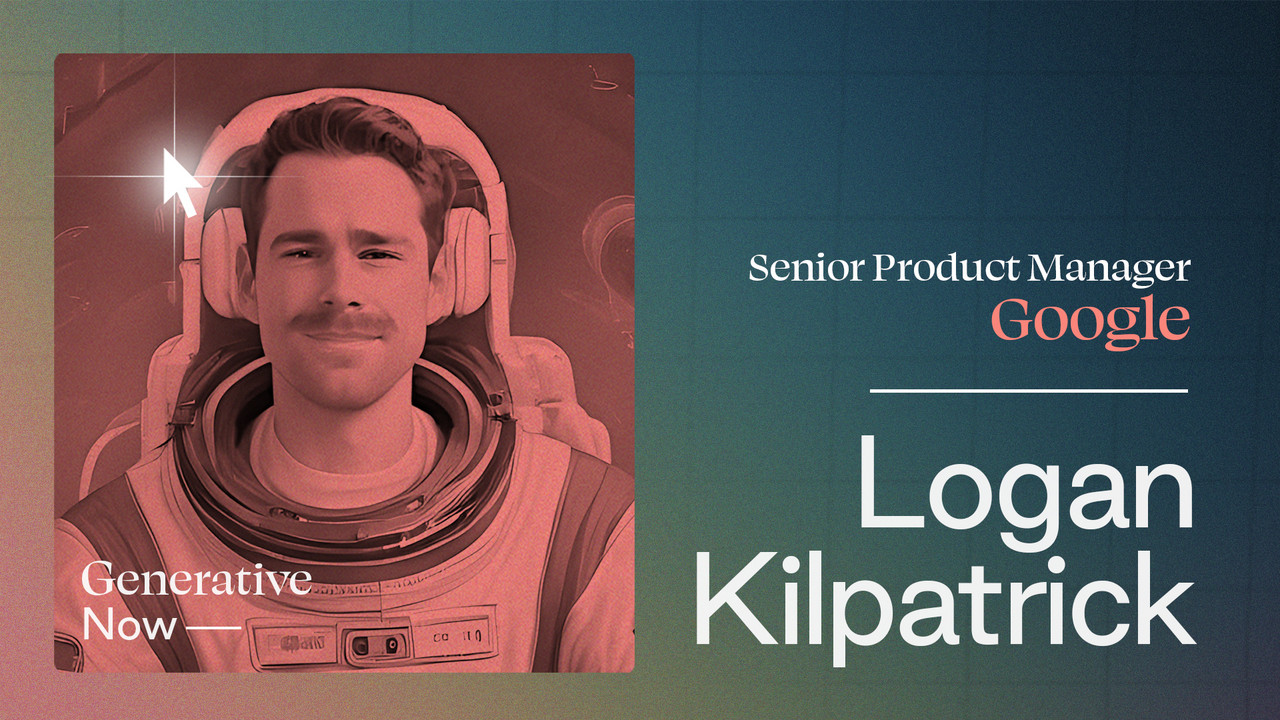
Hey everyone and welcome to Generative Now. I am Michael Mcnano. I am a partner at Lightseed and today we're back with another conversation. This time from the Generative NYC stage where I sat down with Logan Kilpatrick at Google's New York City offices. Logan leads product for the Google AI studio where he and his team built the Google Gemini API into one of the best platforms in the world for developers building with AI.
Before Google, Logan worked at OpenAI, and he has had a front row seat to the meteoric rise of AI over the past few years. So, if you weren't able to attend Generative NYC, you're in luck, cuz we have a full interview here. Enjoy. Without further ado, please help me in welcoming Logan Kilpatrick, senior product manager and lead product for Google AI Studio. Come on up, LOGAN. What's up, Logan? Hi. That was honestly the best uh intro of like just like an event that I think I've been to in like an entire year.
So, I'm very humbled. Such a great job. Thanks. Well, thank you for doing this with me. I've been really really looking forward to this. So, uh, like I said, you have had a front row seat to kind of everything, uh, AI over the past few years. So, uh, we have to ask you about like your journey. How did you get here? Maybe talk to us a little bit, uh, what came before this. I think you were at NASA at one point. You were at OpenAI.
Give us the Logan story. Yeah. Um, well, one, thank you everyone for being here. Well, I'll I'll tell my story very very quickly and we can talk about the exciting stuff, which is uh what y'all are doing, which is building with AI. Um I joined Google back in April to work with a bunch of amazing folks who are who are here in the room um to build AI studio build the Gemini API before that led developer relations at OpenAI joined at the end of 2022 and it was a small startup um much less conviction at that point that it was going to turn into what it did.
I'll give the very quick story which is I had a job offer at IBM at the time. Um, so this uh will hopefully, you know, humbled the story a little bit and I I genuinely at the time did not know if I should take the IBM offer or the OpenAI offer. Uh, the IBM offer was cool to do something that I was excited about. Uh, but it was just like much less clear at that point. Um, I think unless you were in some of the circles that like everything was about to explode.
Um, before that was at a startup doing machine learning and deep learning for digital pathology called Path AI and before that was a machine learning engineer at Apple. started my career as a as a technical IC and have become a a product manager over time. Awesome. What's it been like being at Google after after OpenAI? I'm guessing two very different companies. Yeah, you know, it's the the interesting experience for me personally was like I joined OpenAI as a startup and it it truly felt like a startup and there was 200 people and I think it became not a startup um over over the course of of you know just a year and I think coming back to Google has actually felt like a startup like the Gemini stuff happening inside of Google despite it being like a massive company with huge scale really does feel like a startup like if you have agency and you are excited to do something like you can actually go and build that thing or you know ship that feature for for developers or for customers.
So it's it's felt wonderful from that perspective. Um and I think we have a ton of work that we have to do still but it's uh generally we're trending in the in the positive direction. Maybe before we get into some of that work and what you're trying to accomplish help us like understand what AI looks like inside of Google. Obviously there's Gemini, there's the AI studio, there's there's Deep Mind. help us help us better decipher what we know from the outside.
Yeah. So the and there's a bunch of folks here from Google DeepMind. Um so hopefully the the you'll find the people at Google Deep Mind. I don't want to call them out. Um but so Google DeMind does all the the hard work of sort of building the the generative AI models that sort of power all the internal features at Google. Um as well as a bunch of the developer APIs. And then there's a whole bunch of different teams at Google who are sort of commercializing building internal products.
Um, and that's everyone from, you know, ads to YouTube to, you know, search building AI into the actual products. And then the Google Cloud team, uh, takes a lot of the models and puts it in the hands of builders. So, if you're sort of an enterprise customer, um, you might be using something called Vert.ex AI to get access to Gemini Gemini models. If you're a sort of longtail developer just getting started building startup founder who just wants like the fastest possible solution to build the Gemini, you might use, you know, Google AI Studio, the Gemini developer API.
Um, and and I think that sort of symbiosis between both building first-party products with the models and developing models and putting them in the hands of of external developers is a great competitive advantage for us because like we feel the problems that builders feel like it's not like, you know, uh, cat who's here somewhere. Uh, and I work on AI Studio and like AI Studio is actually just like a firstparty consumer product sitting on top of the models.
And like we live and breathe the like rate limit problems, the quota problems, the model hallucination problems, uh, the same as anyone does. And I think that's it's it's incredibly helpful for us um, from that perspective. Yeah, it's got to be really interesting um, doing this at Google where like you said, you have this advantage where you can distribute this stuff to millions of developers like with the, you know, flip of a switch.
At the same time, there's probably also disadvantages. I mean being being such a big company like Google, you can't just throw some random model out into the into the ether without like you said like really making sure that hallucination is solved and you know and other maybe trust and safety issues are solved like how do you balance some of those challenges with some of the the benefits? Yeah, I think the deep mind team does a good job of of sort of having the infrastructure to um to know like you know what is actually the bar to get this model out the door.
So like some of that is abstracted away from us. By the time the model gets to us, it's like okay, we actually have a reasonable amount of conviction that we want to put this thing out into the world. Um there is a long tale of like other stuff like cloud has its own set of like more customer specific evals cuz you know the model might be safe at the sort of core level and you know might be useful at the core level but like on the very specific things that we know our customers care about it might not be the best model.
Um so there is that like extra level of check as well at the sort of Google cloud level. Yeah. and and and give us a sense for AI studio like what is what does that encompass in terms of products which you're leading like what are what are the different products that roll up into that? Yeah. So, Google AI Studio is the conduit for developers to get into the the sort of Gemini API. So, success for AI Studio looks like you come in, you try the model, you realize, hey, the Gemini models are actually pretty good.
They have, you know, long context, native multimodal, whatever else you're excited about. Um, and ultimately I want to build something with them. So, it's not focused on like being a, you know, true consumer product. that's really focused on get you to that wow moment building with AI and then ultimately um click get code get a Gemini API key and like go and go and build the next company the next startup that's like actually going to provide value for for end users.
Got it. Got it. And um and what is like what is a team building for that look like? I mean product managers, designers, engineers, like how do you how do you even like think about and execute on some of those problems? Yeah, that's another good question. I think uh this is one of the things that is a benefit of of being inside of Google is like there is someone inside of Google and like our amazing venture folks who help put this event together and Jason and and Alex and a bunch of other people um is a good example of like the leveraging the scale of Google to like go and do a lot of these things.
So our team doesn't have you know like a model quality specific function like we're fortunate enough that there's other teams in Google that do a lot of that stuff. So it really is like I I don't know if anyone I'm sure someone inside of Google has said externally that like Gemini really is like this massive crossf functional Google uh process to make happen but it's true because of like how much work happens to get models out the door.
Um it's not just our team and you know we get to sort of stand in the spotlight in some cases because we have the externalization surface but there's a ton of teams doing work to make all this happen. I I've heard a little bit about like there there are these sort of like three different main components of the Gemini ecosystem. Gemini, Vertex, AI and and Gem is it Gemma or GMA? Gemma. Like h what are those three things and sort of how do we differentiate them?
Yeah, the the two main sort of model classes the Gemini models is our sort of set of proprietary um frontier models and then there's also a set of open models uh called Gemma. And the advantage for Gemma is like you can actually own the weights of the model. you can go and put them onto a server somewhere and then you know the apocalypse can happen and you'll still be hanging out with your your Gemma model weights doing AI stuff and like you don't need to worry about anyone else hosting the models for you.
Um there's generally this like lag that happens between the frontier capabilities and what ends up in the Gemma models. It is based on the same research a lot of the same core technology. Um but it is not like you know it's doesn't have long context. For example, the Gemma models aren't natively multimodal. really good in their like class of you know text in text out open- source LLM but it's not it's not super competitive uh yet with like the main frontier capabilities.
Got it. One thing I was thinking about is um it seems like you know there's a lot of talk about like where the value in AI is going to acrue. Obviously, there's a lot of talk about the foundation model layer and there are some there that are several big companies like like Google, like OpenAI, um, which are obviously going to be, you know, big winners at that layer. And then there's also a lot of talk right now about how the apps layer is wide open.
And I have to imagine you, your team, like where you're working in the developer ecosystem, you must see amazing app layer stuff being built. I'm I'm curious like where you all feel like the opportunity is at the app layer. Yeah, that's a great question. Um, I as so I think just to echo what you said, I do think there's an immense amount of value to be created at the Apple. Like if you just look at like one simple proxy for this is if you look at the cost of LMS over time, like basically going down to zero.
Um, the consumer willingness to pay if you sort of graph it on the same exact uh, you know, chart is not going down to zero. Like like people are wowed by AI. Obviously, there's like, you know, millions and millions of people who are willing to pay $20 a month for insert whatever, you know, AI subscription you're interested in. Um, people are really excited and it's creating all of this value. Uh, and the cool thing is like founders and people building stuff actually are the ones who get to acrew that value.
Their companies are the ones who get to acrew that value and like the cost continuing to go down to zero is is great for for people who are building stuff. Um, that said, I think it's there's a lot of, you know, there's a lot of things that people are building that are, you know, not long-term differentiated, are are not actually different. You're talking about like just rappers around models. Yeah. And I I think like you have in in a lot of cases starting as a rapper makes perfect sense, but if you don't like really aggressively figure out a way to get out of that position quickly if there's not a clear like um you know taking off point as part of like the bakedin strategy like it's going to be it's going to be tough because like the model crank is going to keep turning.
You know there's a bunch of obvious things that all the main like AI consumer applications don't do today that they will do over the course of the next two years. like those teams are fighting really hard to build great products as well just like you all are. I think the thing that has gotten me most excited recently at the application layer is all these like differentiated um actual ways of interacting with AI. And I think like notebook LM is like the most recent reminder to me.
And this this came from Google, but um there's a lot of I I don't think there's actually that much interesting differentiated stuff that the Notebook LM team did other than having conviction that like there's a different way that you could be interacting with AI content. Um, and I think there's a whole lot of other things like that that just take time for people to experiment with. But I would I would push in every conversation I have with people building out the application layer push on like it's not chat that is going to create all the value.
Um, it's maybe not even like voice. Like I think there's a lot of people who are like ah voice is not chat. It's voice but maybe it's not even voice. Yeah, maybe it's not even voice. I think I think like keep pushing on what that that interaction paradigm might be. Um, and there's a lot of value to be accured in like having a differentiated perspective. Do you have either through what you're seeing or just like a personal intuition around the areas with or the the categories or sectors within the app layer that you're most excited by?
You know, whether it's consumer or enterprise or healthcare, whatever, whatever it might be, like where in the app layer are you really excited about the future? Yeah, it it still feels like consumer is early. Like I think if you grab a random person off the street and like not San Francisco, they don't know or care about AI. I think this the New York crowd cares about AI. I'm glad you all are here and and building stuff, but most people don't care.
Um because it is hard like the use cases today where the most value are being created like are the enterprise use cases. Like there's just so much if I'm 50% better at coding like many hundreds of thousands of potential dollars for like some large company to be acred by me being 50% better at coding. Um, so I think that will the sort of changing point for this is creating a bunch of value where it's like not putting the technology first.
And this has been my big like qual with people building agent stuff which is like everyone thinks like ah we have to call our product if it's consumer agent stuff we have to call it an agent platform because like that's what's getting the people at Lightseed excited about it or whatever it is. But I think like really the value is abstract away all the agent stuff. Like the idea of agents is great and like you know AI should do stuff for people.
I think that's pretty obvious and people can agree to that. But don't sort of force the longtale of consumers to like have to care about the technology because they don't. That's the reality. Like they're not interested in agents. They're interested in their life being better, easier. Yeah. They didn't care about the GPS. They cared about Uber. Right. They didn't care about the camera. They cared about Instagram. Yeah.
So it's about the product. It is. Yeah, that's super interesting. Speaking of like where value uh will acrue um and you know we talked about some of these sort of big company incumbent advantages, one of the things I've certain read about uh certainly read about in the press a bunch over the past week or so is this notion of sort of reaching the upper limits of scaling. Um you're around a lot of this stuff. I you know can tell by your tweets you're you're a sort of big thinker when it comes to AI.
Like where's your head at on the scaling limit question? are we starting to reach the upper limits of what what these transformers can do? Um, and then maybe we can get into like if so, why are we reaching these upper limits? Yeah, I think it's an interesting question. I think there's there's definitely people probably in this room who are better who are closer to the sort of metal on on being able to answer this. My perspective um is you have to sort of earn the scaling laws.
Like the scaling laws is not like a law of nature. It doesn't just happen. you have to literally earn it. Um, and that means like innovate and do a bunch of stuff that um, enables the technology. Same thing with Moors law. Like you know, Moors law doesn't just happen because someone wrote it down on a piece of paper. Like it happens because there's thousands of engineers that insert whatever hardware company sort of making that the reality.
Um and I think people are very uh in the moment of capturing like you know is scaling continuing to work like today maybe and I don't this not saying this is the case uh but today maybe scaling's not working tomorrow there's innovation that sort of enables it to happen and then all of a sudden you know the scaling law continues back up again right so like we're going to hit some upper limit or we are hitting maybe some upper limit of data or the capability of the current compute clusters like something is capping us like h What?
I don't think so. I I I think we're still I think we're I think we're still sort of um I think we're still sort of pushing pushing up is my is my perspective. But I think even if again even if whatever the technique of today isn't working like tomorrow it will there's going to be algorithmic scaling like we're going to find new ways to or the next 100k H100 cluster comes online whatever it is you know meta throws another 100k H100s at it and then like things start to work again.
Yeah, I that's I'm glad you brought that up. Like that is a very very interesting moat for big companies like Google, Alphabet, Meta like how important do you think uh size of compute cluster is and how long does that advantage last? I think it's it's tough like training LLMs is uh expensive um and it's tough. I think there are a lot of companies that have proved to be solving very domain specific problems like training their own models and I I was talking to uh the founder of a company called cartwheel and the founder was actually at open AI before and they're training like domain specific vision or uh motion models to be able to do like animation and stuff like that and he was showing you know some of the relative to the foundation model doing the capability and the domain specific model they trained because they're only trying to solve that problem.
It is like hundreds of thousands of times more compute efficient to like actually do like inference for those tasks by being specific by being and like it doesn't need to have the weights of like you know writing poetry and doing all this other random longtail use cases like it literally just needs to be good at this motion task. Um and I think there's a future in that and like you don't need to have like crazy amounts of money or crazy amounts of compute.
you can tackle those problems as long as you're not trying to like build the generalist AI agent. Um, I think that that problem will sort of go to the, you know, whoever is willing to throw the most compute, data, money, algorithmic improvements at the problem. So, do you think is cartwheel, by the way, super super cool product and model? They they actually demoed uh at a at one of these events. No way. Yeah. Yeah. Um, do you think that that is that is an approach we will see more and more teams uh go after like highly specialized small models?
Um, is that is that an opportunity to not sort of get run over by these bigger models? That's my instinct. Uh, and and I think the proof will be in the pudding because I'm not sure like how many of those companies have actually gotten to like legitimate scale to know that this is this is the case. But I I think the same is true for just like generally people solving any problem, which is if you really focus on whatever the vertical is, whatever the niche is, like you're not uh you're not competing against like Google and the longtail of these big companies.
like there's very little competition in those like very domain specific um ecosystems and I think like cartwheel is a good example of that. Yeah. What about talent? I mean one of the things we you know we hear and we talk a lot about um when we talk about AI is talent right these amazing people researchers builders you know finding this next algorithmic breakthrough and you know we're starting to see some signs that like talent really may be that important and that much of a moat.
Obviously, there was like a a pretty uh pretty public and notable deal between Google and Character AI recently with Nom Shazir and some of the founding team coming back over here. How do you think about sort of people and talent as a moat and and again like how long is that going to last? Yeah, that's another I mean I think it matters a ton like at the end of the day like if the the talent is the difference between you winning and not winning.
I think the same the tr it's true at Google. It's true for every startup that's building. Um I think more so than I think anything else I uh my personal belief is like you you can win with having talent even if you have a worse idea a worse you know etc etc. And I'm actually curious for you backing companies like at the early stage, is it is it a same a similar Yeah, I mean we we we think talent is absolutely critical and you know as a newish VC and former product person CEO like when I first came into the the job I was very very focused on ideas and products and and still am of course but I think as I'm getting more experience and learning from some amazing people it's really about the talent.
It's about the people, uh, for sure. And it's interesting to see the talent flow. I think, uh, which I think the the challenge for a lot of things that aren't AI right now, um, as I'm sure there's like I'm assuming there's at least one founder in here who's building something who's not that's not an AI, it's hard because like the center of gravity continues to shift between all these different things. And if you don't have the ability to pull in the like best people, uh, it's tough.
Yeah. Let's get into uh, everyone's favorite topic. What is AGI? Yeah, I I think I I still align with the version of AGI where it's, you know, the model able the models are able to do most of the things that are economically productive that humans are able to do. And I don't know if anyone listened to the full five hours of the the Daario Lex Freedman podcast. You did. You have too much time on your hands and you should be you should It's really good though.
It is good. It's good entertainment. But yeah, I think the 2026 2027 timeline to make that happen seems seems uh interesting. Do do you buy that? Do you think we're we're headed there? I think it's tough. I I think the models will will continue to go up and and do so much more. I think the real question is it's like a um to do most of the things that humans are able to do that are economically productive. It's not like a moving uh bites around problem.
It's a moving like atoms around problem. uh which is actually just like a lot harder to scale. Like I'm I'm fully bought into the idea that there could be like digital versions of like maybe it's AGI in the sense that it can do all the things that are like digitally productive that humans are able to do. But the long tail of like you know making robots that actually do most of the things humans are able to do like in the physical world I think is is is much longer off than uh 2026 or 207.
Just just to clarify what you're saying. So, it sounds like what you're saying is like yes, we need we need some breakthrough on the model side, but then we need to um have a physical embodiment of it and get into robots and like you said humano, you know, humanoid robots or or whatever full self-driving. Is is that what you mean? Like it has to make its way out into the physical world. It has to make its way out of the physical world and the we are you could have AGI today.
uh assuming you had AGI today and the current state of robotics was the same like we're still and of five years away from like any large scale you know manufacturing run of like humanoid robots that are like actually going to be able to scale out and have any meaningful impact on the world. So it's like we can definitely scale up the like digital intelligence but I think actually manifesting intelligence out into the world in a physical form is going to be much much harder to make happen.
How does Google think about this? It's like obviously there are startups out there that you know they they have very they're very publicly stating that like their mission is AGI or super intelligence like is that something that Google talks about and thinks about internally? It's like hey we're doing Gemini because we want to achieve you know artificial superhuman intelligence or do you not even like really speak in those terms inside of Google?
I've heard Demis not to speak on Demis' behalf. I've heard Demis say a bunch of times he wants to make AGI I think for Google as like Google's mission as a company is you know organize the world's information and and make it universally accessible. Um so I think it's like less uh it is much less at the Google level like you know AGI focus. I think Deep Mind and and I'm sure Demis like probably want to make AGI um as sort of the the focal point.
He's been pushing on that for you know 10 years now or something like that. Yeah. Are you looking forward to AGI or are you are you a an accelerationist or or a doomer or somewhere in between? I think I'm looking forward to it in the sense that I think there's a lot of tough problems in life. Uh and I'm excited for AI to help solve a bunch of those tough problems. I think the the the real practical downside is um and again back to this narrative of like you can grab random people on the streets of any city besides San Francisco and ask them about AI and it you know if if the tool actually does deliver on this promise of everything that everyone says it's going to um the time horizon to educate the world about whatever this new tool is or technology uh is just very long um and you can even look at chatbt as like the most uh success uccessful version of this.
There are billions of people on earth who have never heard of Chad GBT, have no idea how it works, all that stuff. And and um if the technology is actually that powerful, I think there there'll be a lot of downside for the people who aren't sort of in the know that this thing exists or have access to it. And I think like that has the chance for, you know, accelerate the the discrepancy and the delta between people who have access to things and who don't, which I think is a very tangible downside.
Um, and I I don't think there's been enough push in in my personal opinion like I think at a government or like world level of like actually uh helping get the those types of resources and education into the hands of people who are going to need it. So maybe tying this back to uh app layer developer ecosystem like where it's where it feels like a lot of value is being created and it could be an area that experiences disruption sooner than in other areas as a result of AGI is coding, right?
It's like these things are really good at coding and they're getting better very very quickly. Like how do you think about the long-term impact of AI on software? Like what does software become? Is it all dynamic? is the god model just like spinning up products for us in real time and how do you sort of intercept that future with maybe what you're doing doing like at the developer ecosystem level. Yeah, it's a good question.
Um, and it's something that I think about a lot as a as a weekly active cursor user who I think are who I think are closest to this. I I think the the cursor example is relevant in that I think the path to get to that point is software engineers increasingly having this like really powerful tool in their hands. Um which I think is like a different version of the world than like AI is going to replace software engineers.
I think it really is like the AI augmented software engineer is going to be able to do an incredible amount of stuff in the future. Um, but it is not going to be able to like the the fundamental nature of having to prompt models very specifically to do what you want is not going to change. And I think like the example of you know hey AI model go and spin up this like vertical SAS company for me do for me to do is like not actually going to be possible to to happen.
I think in the way that we that we think it's going to happen today. it's going to look my my assumption is it's going to look very different of like how the interaction with the model or you know the way that the model is going to go about solving those problems. Um cuz it it's just going to need more guard rails than the current versions. Like you can't just let the model run wild and do that thing. It's going to burn a whole bunch of compute and then end up with like not the vertical AI SAS thing that you really wanted it to do in the beginning.
Um which will be yeah it'll be interesting to see. I think there's a bunch of like very specific problems that need to be solved to get to the point where the models are able to like just generate entire stacks of software themselves. I do think it's going to be really interesting uh for enabling people to create software that maybe don't don't know how to code or maybe don't know how to code very well. It feels like you could see this almost Cabrian explosion of software right and all these amazing new applications that you really couldn't have before.
I think that's that's something that could be very very interesting uh and especially for maybe a developer platform. Yeah, I agree. I think I think people have been pushing on like low code for a very long time and it feels like this, you know, for what it's worth, the the low code sort of people were had their heart and head in the right place. It was just like needed a couple more cycles of innovation to actually make it happen.
Um, so it'll be interesting to see how much that that actually comes to fruition. where where should we expect to see uh Gemini uh over the next few years throughout the g Google ecosystem? I obviously starting to see it more and more in search. Um I anticipate like home could be next Whimo. I mean what can you tell us about the future of where we see this thing? Yeah, that's a good question. I think I mean the the wonderful thing for Google is all of these products benefit from AI.
So my my expectation is is going to be everywhere. Um I think on like very specific different things. I think it would be really interesting to see how you know does it make its way into I think there's some interesting research there research papers they put out about Gemini and how it relates to stuff. So I I don't I don't want to represent that work. So you can go look it up. But um yeah, it it will be the domain specific models is also the other angle of this is like how many of those problems actually benefit from like those teams having their own version of Gemini that's you know Google has done a bunch of work with that as well with Medgemini with learnm a bunch of things based on the core Gemini model but solving the very vertical problem.
Um, so it it does my my guess is actually for a lot of the products for them to be like if it's really a successful use case, they'll end up doing a vertical um and and not just use the like base model and with prompting. Super interesting. I could ask you questions all night, but I want to make sure we get a couple questions from the audience. Please say your name, what you're working on, and then uh ask Logan your question.
Hey, my name is Mayor. I'm a PM at Cash App. Logan, Michael, thank you for this panel. This is fantastic. Um, question. So, there's probably a ton of founders here that are early stage thinking about using Gemini, OpenAI, Lama, etc., etc. Logan, question for you. How does Gemini differentiate? Why do I use Gemini versus the others? Yeah, this is a great question. It's something that I spend a bunch of my time thinking about because people ask us this question all the time.
I think there's like the core model capability standpoint. Like Gemini is the only model that does long context. Um, it's the only model that's natively multimodal, can take in video, can do audio and all that stuff. And really, if you look at what are some of the most successful like product deployments of AI, it's people who are sort of leveraging the frontier capabilities. Like there's, you know, not a lot of applications that are leveraging long context.
It's actually like one of the fundamental enablers of really, really cool user experiences. Um, and I think it's, yeah, leaning into that. And I think this this actually carries across not just Gemini specifically, but like as you're looking at the models, finding the thing that that model is like uniquely differentiated at, leaning into that from a from a product experience. Um, and and there's also like as you explore that state space, there's a lot of things that are like less obvious that are less talked about, but like a good example in the Gemini world is um the model is like ranked one of the best at creative writing.
uh which is like not something that's super obvious and like you kind of have to figure that out yourself, but uh yeah, do that exploration. I don't I don't know exactly what you're building uh at Cash App, but yeah, would love to chat more. Next question. Hi. Uh hi, Logan. Uh thank you, Mike, for for for moderating. Uh my name is Jacqueline. I'm the founder of Star Cycle. We help founders shut down their companies faster.
And so, everyone listen up. No, I'm just kidding. Um so quick quick question is would love to get your take on like how AI agents like what that landscape is kind of looking like especially from your perspective because you know a little bit of context is that we are building using the Google agent builder actually um to have AI agents do effectively many different parts of you know the shutdown process when a founder goes through dissolution.
So yeah, would love to see specifically or would love to hear about what you're excited about, what agents are capable of doing, where, you know, what do you think is a little overblown at the moment? And where do you think people are underestimating? Yeah, I I think people are overestimating the consumer willingness to like delegate very specific tasks to models. I think shopping is a good example. there's like a whole tarpit of AI agent ideas that are, you know, going and, you know, have the model buy tickets for a flight for me.
I think all of those use cases are not actually going to be where most of the value is created. Like you should be doing things that the or or I guess put a different way, I think the thing I am excited about is like the models going and solving this long tale of problems that like I'm not interested in solving. And I feel like humans this is like a very human be behavior consumer behavior problem in that people actually like shopping like is the is the very simple answer to that question and you have to go and solve the problems of things that people really don't like doing um or create such a better experience that like they're willing to have AI augment it.
Hi Steve Liss, co-founder at open ads.ai. We use AI to generate custom ads in real time for every impression. So with each generation of foundation models, we've seen new use cases unlocked just from the quality of the models. Uh Gemini is interesting since it's running on TPUs, it's running at 200 tokens per second. What use cases do you see getting unlocked by just the speed of these models increasing? It's a good question.
I think there's like a lot of real time monitoring use case where like speed is very obvious. a lot of things that have to do with uh like taking actions based on what's happening in a video screen. So there's a whole long tale of like video image understanding uh sort of real time. You can imagine like sports as a principal example of this uh where having a intelligent model is actually incredibly useful but it's has to be like it's incredibly like latency sensitive.
um if I've like already kicked the soccer ball and ran 20 feet like you know it's no longer um very useful if it takes five seconds for the model to say that that happened. Um so I think lots of interesting use cases around vision and image understanding specifically which also historically have been spaces where people have had to build uh domain specific models. So I think there's like this huge long tale of enterprise value that's gone to companies that built those domain specific vision models or like internal teams.
Uh this is what I started doing in my career at at Apple was training domain specific computer vision models to solve like very very niche problems. And I think the LLMs of today with vision capabilities uh could probably do most of those use cases today especially with how u how much faster they are. I I also think we're going to see, you know, use cases that are already getting adoption getting much much more once they get faster, right?
Like even just, you know, answers through whether it's the Google AI answers or perplexity. Like these things are awesome. They're not that fast yet, especially when you compare it to just Google search. Yeah, Google search is like instant. Um or maybe some of that software on demand stuff we talked about earlier. Like you need low low low latency to pull any of that off. though I think a lot of the demand for like tokens is actually rate limited by how quickly you can get token also the cost but like how quickly you can get tokens I think there's a whole long tale of new use cases to be built assuming that tokens you know were coming out at a th00and 10,000 TPS whatever it is yeah hey I'm a student at MIU I was kind of wondering like what's a question that's been on your mind recently What are you thinking about?
Is AGI god? Is AGI No, I'm just kidding. Um, or am I? I've been having a bunch of interesting conversations with people about uh how much having frontier capabilities that don't actually provide value matters in the in the context of like getting people excited about what you're doing. I think there's a lot of uh flashy AI stuff uh that it's it's like very clear is not creating the value like a lot of the value is like much of the boring stuff and this is probably generally tracks across AI and and is not unique but um trying to find that balance of like you know do we do the thing that we know is going to be useful for developers and is going to create all this value or do we sort of allocate our resources to do this like frontier thing that like we isn't actually going to be that like create that much value today, but is sort of an important signal to to tell people uh where we're going and what we're capable of and and trying to find a balance between those things is tough.
Um and yeah, spend time thinking about it. Thank you all for the questions. Logan, thank you so much for speaking with all of us today. Everyone give it up for Logan to Patrick. Thank you so much for listening to Generative. Now, if you liked what you heard, please rate and review the podcast. That really does help. And of course, subscribe to the podcast so you get notified every time we publish a new episode. If you want to learn more, follow Lighteed at LightseedVP on YouTube X or LinkedIn.
You can follow me at Mcnano Mig on all the same places. And Generative Now is produced by Lightseed in partnership with Pod People. I am Michael Mcnano and we will be back next week. See you then.